


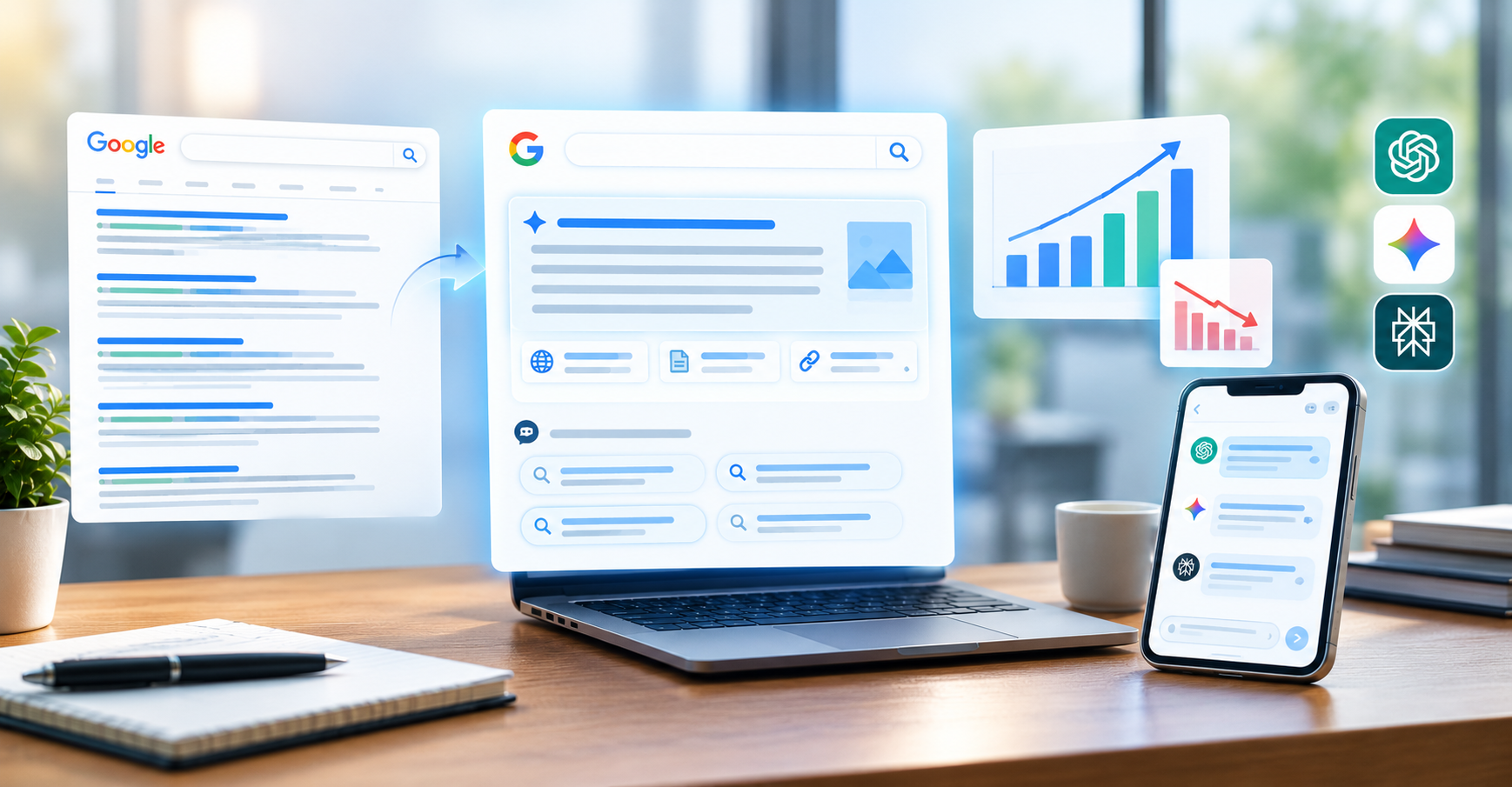
Search used to be pretty straightforward. You typed in whatever you wanted, got ten blue links, looked them over, and clicked one. That’s the old routine. Now, Google answers your question right away — for more and more searches, there’s an AI Overview sitting at the top, pulling info from different places and showing a quick summary before you even touch the scroll bar.
For users, honestly, it’s pretty handy. But for marketers and publishers, it’s a real shake-up. The way organic traffic works has changed. This blog walks through how these AI Overviews affect clicks, what the latest numbers say, and what you need to do so your content actually gets cited.
What Are AI Overviews?
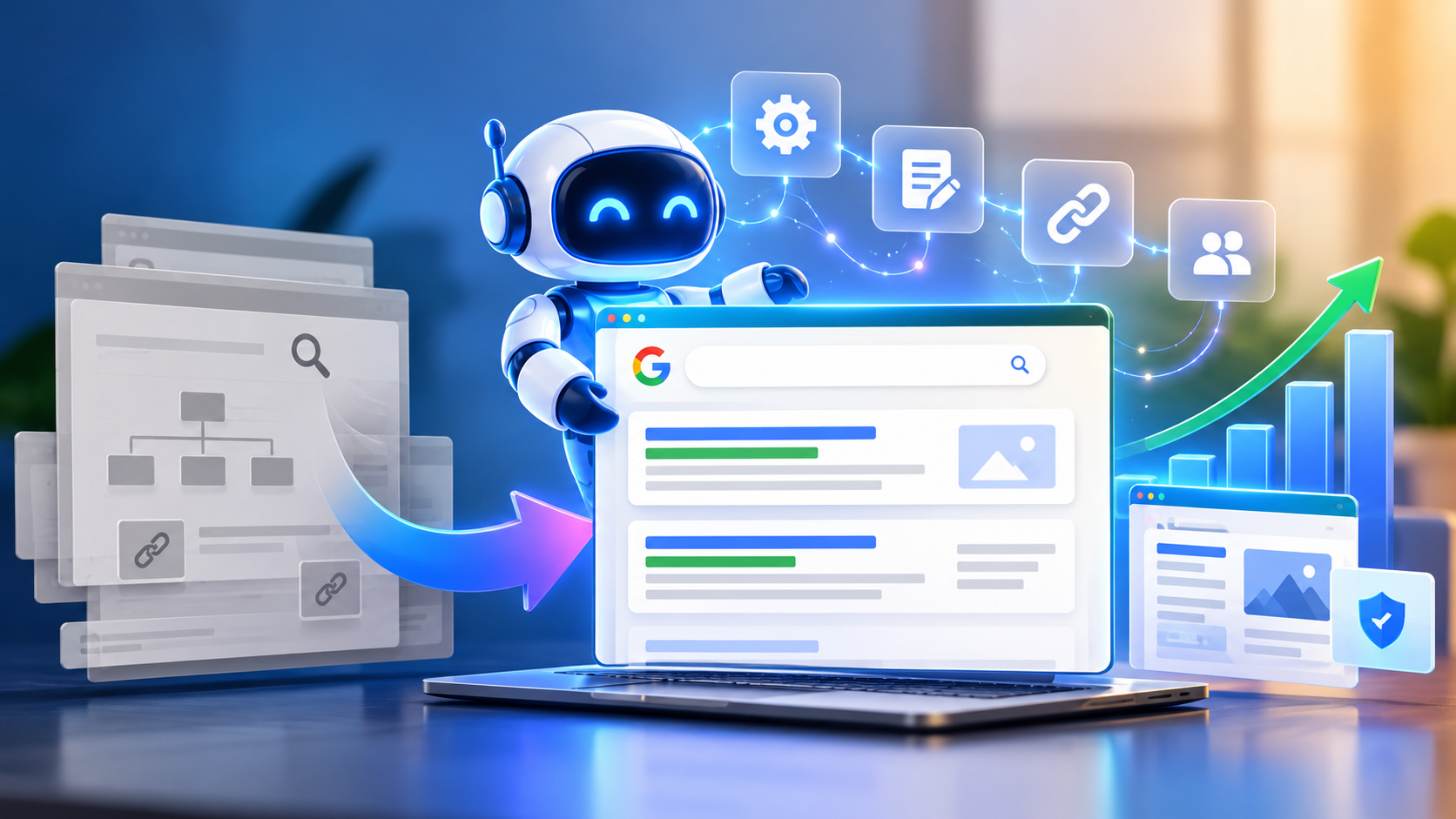
Google AI Overviews are those AI-powered answer boxes you see at the top of some search results. They use Google’s Gemini models to pull together info from several web pages and show a short summary, usually with links to the sources. They’re like featured snippets, but broader and more conversational, handling questions that aren’t so simple.
Alongside this, Google’s rolled out AI Mode — a more chatty, interactive search that makes the answer itself the end goal. Visiting a website just isn’t required anymore.
How AI Overviews Are Changing Click Behaviour
1. Fewer clicks land on top-ranking pages
The change is clear: if the answer’s right there in the results, fewer people leave Google. Ahrefs looked at 300,000 keywords, comparing click-through rates in December 2023 versus December 2025, and found that pages at the top saw their average CTR drop by nearly 58% when AI Overviews were present. In an earlier study, the drop was closer to 34.5%. So yeah, it’s getting worse.
2. More “zero-click” searches
SparkToro, using Similarweb’s data from US Google searches (Jan–April 2026), figured out that about 68% of searches ended with no click at all. When an AI Overview showed up, zero-click searches went from around 54% to 72%, and organic clicks fell by about 38%. The study says AI Overviews play a big part in this — though they couldn’t break down exactly how much.
3. Getting cited matters, but doesn’t totally fix things
According to Seer Interactive data reported by Search Engine Land, CTRs look like this: about 3.3% with no AI Overview, 2.1% when your page’s cited, and just 0.9% when you’re left out. So, being cited doubles your odds compared to not being mentioned at all, but you’re still not back to the numbers you’d get without an AI Overview.
4. Some signs clicks are stabilising
It’s not just a downward spiral. Seer says that organic CTR on AI Overview queries hit a low of 1.3% in December 2025 and bounced up to about 2.4% by February 2026. Sure, it’s still low and just one study, but people’s habits are still settling — don’t assume last year’s stats will stay the same.
5. The users who click are different
When AI handles the easy stuff, the ones who click are looking for depth: comparisons, tools, raw data, opinions, buying advice. Seer also found CTR went up on queries without AI Overviews, so the clicks you get are more intentional and valuable now.
6. Impact depends on search intent
AI Overviews aren’t everywhere. Seer’s numbers say they pop up in about 36% of “informational” queries, 86% of question-style searches, and 95% of comparison queries — but just 5% of transactional ones. Branded searches, local queries, and high-intent commercial searches are hit way less than top-of-funnel info content.
A Note on the Numbers
Every study uses different methods, datasets, and timeframes. Nobody can measure clicks inside AI Overviews directly. Google disputes heavy traffic loss claims too, saying links in AI features actually deliver high-quality clicks. So take these numbers as a general direction, and keep an eye on your Search Console data, especially if your audience is in India or you suspect a different query mix compared to US-based studies.
What This Means for Marketers
- Rankings alone no longer guarantee traffic. A position-one page can lose a large share of its clicks to the overview above it.
- Visibility is now two-layered. You need to rank in organic results and be cited in the AI-generated answer.
- Informational content is most exposed. Simple definitions and quick-answer posts are the easiest for AI to summarise away.
- Metrics must evolve. Impressions, citations, brand mentions, branded search growth and conversions matter alongside clicks.
How to Optimize Content to Show Up in AI Overviews
There’s no magic formula and Google won’t drop a checklist, but the stuff that gets cited follows solid SEO basics — just applied more precisely.
1. Nail the SEO basics
AI Overviews pull mostly from pages that already rank well. Make sure your pages are crawlable, indexable, fast, mobile-friendly, and ready for snippets. If you block snippets or crawlers, you’re out.
2. Answer directly — then add depth
Put a clear answer (40 to 60 words) right under a question-style heading. Once you cover that, expand with context, examples, and data. This structure is perfect for AI to grab, while real people still get something extra.
3. Focus on question and comparison queries
AI Overviews show up most for “what is,” “why does,” “how to,” “X vs Y” type searches. Build your content around these, using real People Also Ask questions and customer queries from sales or support.
4. Structure for both machines and humans
Use clear headings, short paragraphs, bullet points, tables, numbered steps. Add an FAQ and relevant schema markup (“FAQ,” “Article,” “HowTo,” etc.) to make your page’s meaning obvious.
5. Publish original, expert-driven content
AI mainly summarises what’s out there. Give it something to cite: original data, surveys, case studies, expert quotes, personal experience. This lines up with Google’s E-E-A-T (experience, expertise, authoritativeness, trust). Use named authors with credentials and transparent sources.
6. Build topical authority
Cover your subject fully — use clusters of interlinked posts, not just random one-offs. Strong topical authority tells Google your site’s reliable, so you’re more likely to be chosen for many queries.
7. Get third-party validation
Mentions from other brands, media coverage, reviews, industry directories, and expert commentary outside your site add credibility. Digital PR isn’t just about links anymore — it’s part of the signals AI needs.
8. Keep content fresh and accurate
Check your stats, dates, and recommendations often. Outdated info kills trust and reduces your chances of being cited.
9. Optimize for the clicks that count
You don’t need every query to win an AI Overview. Make stuff AI can’t easily replace: calculators, templates, original research, detailed comparisons, tools, opinion-heavy analysis. Give readers a clear reason to click and invite them to take the next step.
10. Track and improve
Watch your performance in the Search Console. Compare impressions to clicks (for info queries), manually check which queries trigger AI Overviews and if you’re cited. Try changes, then measure what happens.
A Quick Action Plan
- Audit your top 50 informational pages — note which trigger AI Overviews.
- Rewrite key sections with direct answers under clear question headings.
- Add original data, expert insights, and updated stats.
- Make sure relevant schema markup is there; fix tech gaps.
- Invest in digital PR and get third-party mentions.
- Report on impressions, citations, branded search, and conversions — not just clicks.
The Bottom Line
AI Overviews are shifting search from clicks to answers, and CTRs have dropped fast for affected queries. But it’s not all bad news. Cited pages still score more clicks than those left out. The users who click are more intent-driven. Trusted brands can win visibility even if users don’t always visit. The marketers who adapt will stop asking “where do we rank?” and start asking “are we the source AI trusts?” Aim for both, and you’ll stay visible however search evolves.