




What Is Digital Marketing?
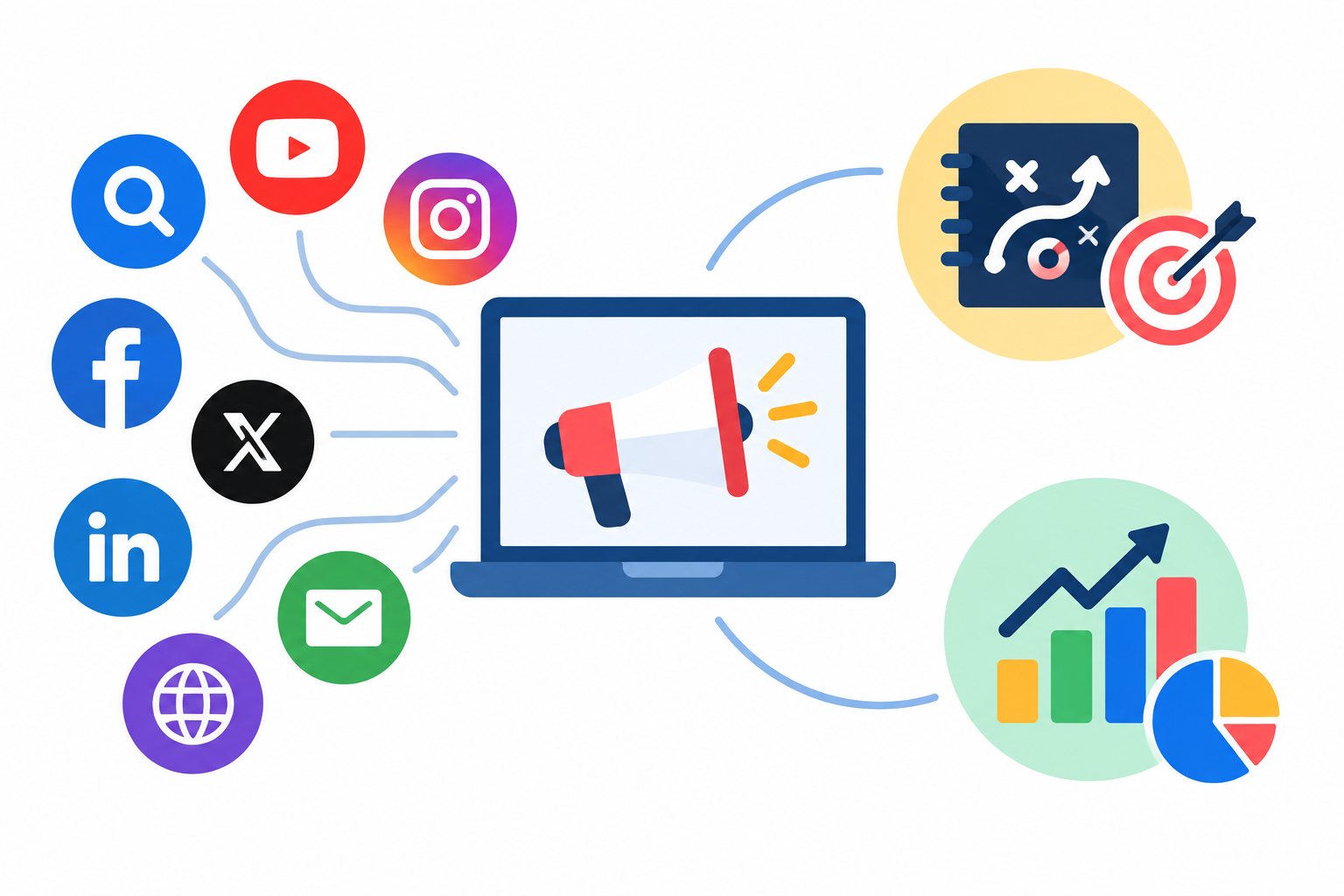
Digital marketing is the practice of promoting a brand, product, or service through online channels and digital technology. That includes search engines, websites, social platforms, email, mobile apps, video, and paid advertising.
The key difference from traditional marketing is not just the medium. It is the feedback loop. A billboard cannot tell you who looked at it or what they did next. A digital campaign can show you who clicked, how long they stayed, what they bought, and which message pushed them over the line. That makes digital marketing faster to test, easier to adjust, and far more accountable.
Traditional channels have not disappeared, and many brands still use them. But for most businesses, digital now comes first because it offers wider reach, sharper targeting, and clearer proof of results.
Why Digital Marketing Matters: 4 Core Benefits
1. Global reach on a small budget
A local bakery, a niche software startup, and a multinational can all appear in the same search results or social feed. Digital channels remove many of the geographic and cost barriers that once limited smaller brands, so you can find your ideal audience wherever it lives.
2. Precise audience targeting
You can aim your message at people based on interests, location, behavior, stage in the buying journey, or the exact words they type into a search box. Better targeting means less wasted spend and messages that feel relevant rather than random.
3. Measurable performance
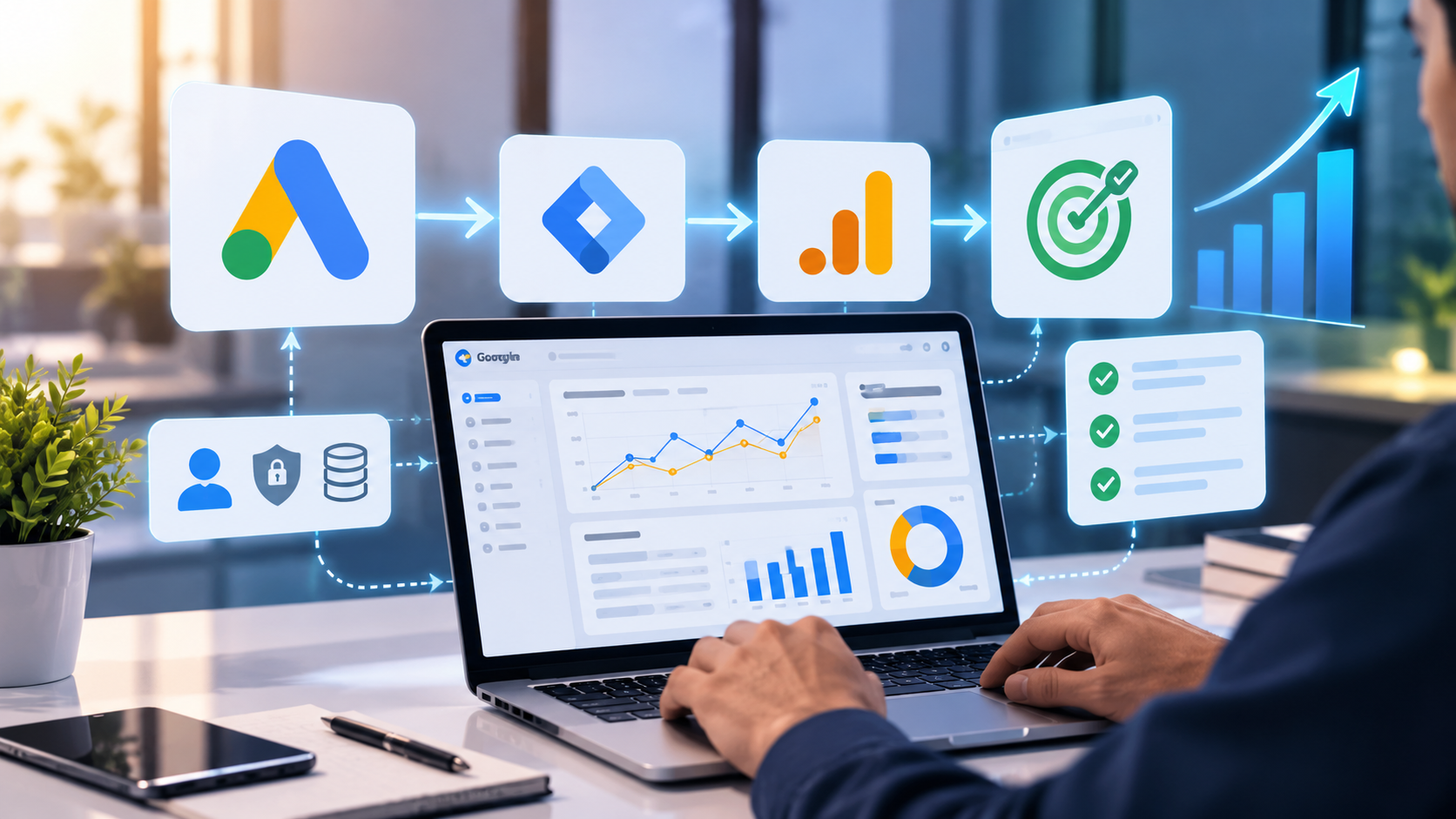
Clicks, sign-ups, purchases, email opens, and time on page are all trackable. Instead of guessing which campaign worked, you can look at the numbers, learn from them, and put more budget behind what performs.
4. Stronger return on investment
Because you can see which channels and campaigns convert, you can shift money away from weak performers and toward strong ones. Over time, this steady optimization is where much of digital marketing’s return comes from.
The Main Types of Digital Marketing
Digital marketing is really a toolbox. Most successful strategies combine several of these channels rather than relying on just one.
Search engine optimization (SEO)
SEO is the work of making your website easier to find in organic search results. It covers keyword research, high-quality content, technical site health, page speed, internal linking, and earning links from reputable sites. SEO takes time to build, but the traffic it brings is not charged per click, which makes it one of the most sustainable channels over the long run.
Content marketing
Content marketing means creating useful blog posts, guides, videos, podcasts, and tools that answer your audience’s questions. Good content earns search visibility, builds credibility, and gives people a reason to come back before they are ready to buy.
Pay-per-click (PPC) advertising
With PPC, you pay when someone clicks your ad, typically on search engines or social platforms. It delivers fast visibility and is excellent for testing offers, promoting launches, or capturing people who are actively searching for what you sell. The trade-off is that traffic stops when the budget does.
Social media marketing
Social platforms help you build awareness, start conversations, and nurture a community around your brand. Each platform has its own culture and audience, so the best approach is to focus on the one or two places where your customers actually spend time instead of trying to be everywhere.
Email marketing
Email remains one of the most direct and cost-effective ways to nurture leads and retain customers. Welcome sequences, product updates, abandoned-cart reminders, and personalized offers all help you build relationships on a channel you own, rather than one controlled by an algorithm.
Influencer and affiliate marketing
Partnering with creators or affiliates lets you borrow the trust they have already built with their audiences. Smaller, niche creators often deliver more engaged and relevant audiences than celebrity-level accounts, and often at a friendlier cost.
Mobile and app marketing
If you have an app, or if much of your traffic arrives on phones, mobile-focused tactics such as push notifications, in-app messaging, and mobile-optimized landing pages become essential.
Inbound vs. Outbound Digital Marketing
Most digital tactics fall into one of two approaches.
Inbound marketing pulls people toward you. By publishing helpful content, optimizing for search, and engaging on social media, you become the answer when someone starts looking for a solution. It builds trust slowly but compounds over time.
Outbound marketing pushes your message out to an audience, whether or not they were looking for you. Paid ads, cold email outreach, and retargeting campaigns are common examples. Outbound can produce faster results, but it can feel intrusive if the message is not relevant.
The strongest strategies blend both: inbound builds a lasting foundation, while outbound accelerates growth and re-engages people who showed interest but did not convert.
B2B vs. B2C Digital Marketing
Who you sell to changes how you should market.
B2C (business-to-consumer) marketing usually targets individuals who decide on their own and often decide quickly. Purchases tend to be smaller and more emotional, so visual storytelling, social proof, short-form video, and clear promotions work well.
B2B (business-to-business) marketing usually involves longer sales cycles, several decision-makers, and higher-value purchases. Buyers want evidence that your solution will save money, reduce risk, or improve results. Whitepapers, case studies, webinars, LinkedIn campaigns, and nurture email sequences tend to carry more weight, and relationship-building matters a great deal.
The tools overlap, but the tone, timing, and content depth are very different. Always write for the real person making the decision.
Digital Marketing Metrics and KPIs That Matter
Data is what separates digital marketing from guesswork, but it is easy to drown in numbers. Start with these essentials.
- Website traffic: How many people visit, and which channels send them. It tells you about reach and awareness.
- Leads: The number of people who show interest, such as by filling out a form or subscribing. Track lead quality as well as volume.
- Conversion rate: The percentage of visitors who complete a desired action. It reflects how persuasive your page, offer, and experience are.
- Cost per lead (CPL): Total spend divided by leads generated. Use it to compare channel efficiency.
- Cost per acquisition (CPA): What you spend to win a customer or conversion from a specific campaign.
- Customer acquisition cost (CAC): The full marketing and sales cost of acquiring one customer.
- Customer lifetime value (LTV): The revenue you can expect from a customer over the relationship. A healthy business earns far more in LTV than it spends on CAC.
- Return on investment (ROI): Revenue generated compared with what you spent. It is the headline number for most budget decisions.
Pick a handful of KPIs tied directly to your goals instead of tracking everything. If your goal is sales, focus on conversion rate, CPA, and ROI. If your goal is awareness, watch traffic, reach, and engagement.
How to Build a Digital Marketing Strategy in 5 Steps
You do not need a giant budget to start. You need clarity and consistency.
- Set specific goals. “Get more customers” is vague. “Generate 200 qualified leads per month at under a set cost per lead” is something you can actually pursue and measure.
- Know your audience. Define who you are trying to reach, what problems they face, where they spend time online, and what language they use. Customer interviews, survey responses, and analytics data all help.
- Choose a few channels. Match channels to your audience and goals. A B2B software company may lean on SEO, LinkedIn, and email, while a fashion brand may prioritize Instagram, short video, and influencer partnerships.
- Create valuable content and offers. Whatever the channel, give people a reason to care: useful answers, clear value, and an obvious next step.
- Measure, test, and refine. Review performance on a regular schedule. Run A/B tests on headlines, emails, and landing pages. Double down on what works, and cut what does not.
Digital Marketing Trends to Watch in 2026
The fundamentals stay steady, but a few shifts deserve attention.
Personalization at scale: Customers expect messages that reflect their interests and behavior, not generic blasts.
AI-assisted marketing: Teams use AI for research, drafting, personalization, and analysis. It saves time, but human judgment and a clear brand voice are still what make content stand out.
Search is evolving: People increasingly get answers from AI-generated summaries and conversational tools, so clear, trustworthy, well-structured content matters more than ever.
First-party data: With tighter privacy rules and fewer third-party cookies, brands are investing in email lists, accounts, and on-site behavior data they collect directly and with consent.
Short-form video: Quick, authentic video continues to drive discovery across major social platforms.
Frequently Asked Questions
Digital marketing is promoting products or services using the internet and digital tools, such as search engines, social media, email, and online ads.
Traditional marketing uses offline media like print, radio, and television. Digital marketing happens online and offers real-time tracking, more precise targeting, and easier testing.
SEO and content marketing, paired with email, are a strong starting point because they build lasting assets at a relatively low cost. Add paid ads when you are ready to speed things up.
Paid ads can bring traffic within hours, while SEO and content typically take several months to build momentum. Most businesses see the best results from steady effort over time
There is no single answer. Start with an amount you can afford to test, track results carefully, and increase spend on channels that clearly deliver a positive return.
Final Thoughts
Digital marketing is not one tactic. It is a connected set of channels and habits that help you reach the right people, earn their trust, and learn from every interaction. Start with clear goals, choose a few channels you can run well, track the metrics that matter, and keep improving. Small, consistent steps compound into real growth.
Ready to put this into practice? Pick one goal, one channel, and one metric this week, then build from there.