


For twenty years, online advertising has meant that people type a few keywords and brands bid on them. ChatGPT is trying to change that. Someone describes a problem in full sentences, gets an answer, and may see a relevant sponsored suggestion underneath. Search becomes asking.
The channel has moved quickly since it was first announced, so here is where things stand and what it means for your budget.
What ChatGPT ads are
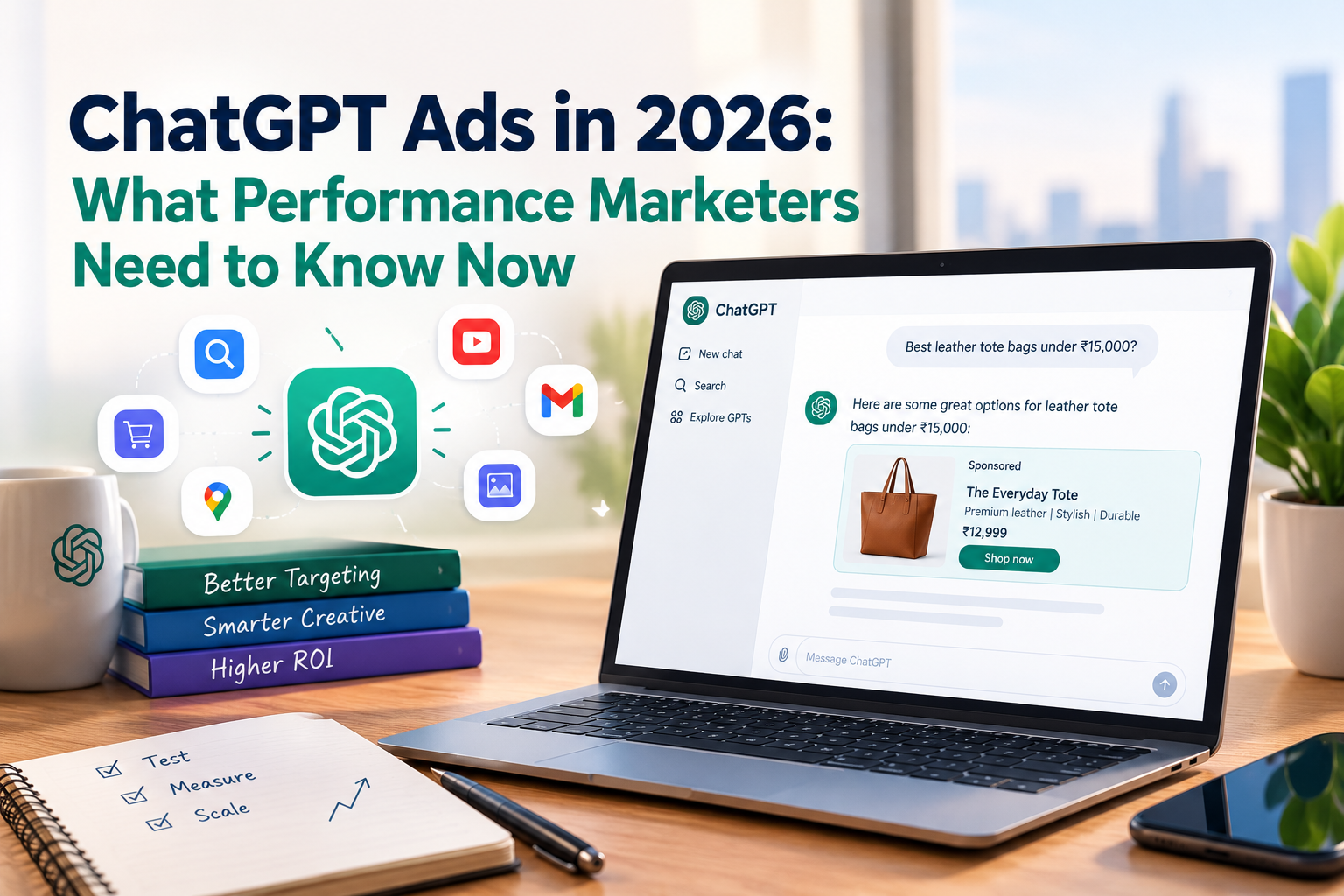
A ChatGPT ad is a sponsored placement that is shown based on what the conversation is about, not on a keyword you bid on. Say someone asks for the best leather tote brands under ₹15,000. A relevant brand may appear below the answer with a clear sponsored label.
Ads show up below ChatGPT’s responses when a relevant sponsored product or service is available, and they are labelled and visually separated from the AI-generated answer. That separation matters for trust, and OpenAI has been consistent about it.
From invite-only to open to most advertisers
At launch, ChatGPT advertising looked like a premium, big-brand product. Early reports pointed to CPMs around $60 and very large minimum commitments, with global agency groups as the main buyers. That was a fair description of the early pilot, but it no longer holds.
- OpenAI said ChatGPT Ads passed a $1 billion annualised revenue run rate less than 200 days after the February 2026 pilot began.
- OpenAI also said the platform is used by tens of thousands of advertisers, and that self-service buying through Ads Manager opened across India, Europe, the Middle East and North Africa.
- In India, self-serve access opened on September 4, with daily budgets starting at ₹725.
So the question has changed. It used to be whether you could afford to get in. Now it is whether you can run a disciplined test.
Who sees the ads, and who doesn’t
Reach is narrower than “all ChatGPT users”, and that affects your audience math.
- In India, ads go to logged-in adults on the Free and Go tiers, while Pro, Business, Enterprise and Education subscribers stay ad-free.
- Reporting on the original launch also noted that ads don’t appear in temporary chats, for logged-out users, or for under-18s.
In practice, you are mostly reaching people on free and lower-priced plans. That may suit mass-market D2C and consumer brands. It may suit a premium B2B offer less.
How targeting works
This is not a behavioural ad network. Targeting is mainly contextual: what the conversation is about, plus signals like language and broad location. Some personalisation exists, but users can turn it off and clear the data used for ads at any time.
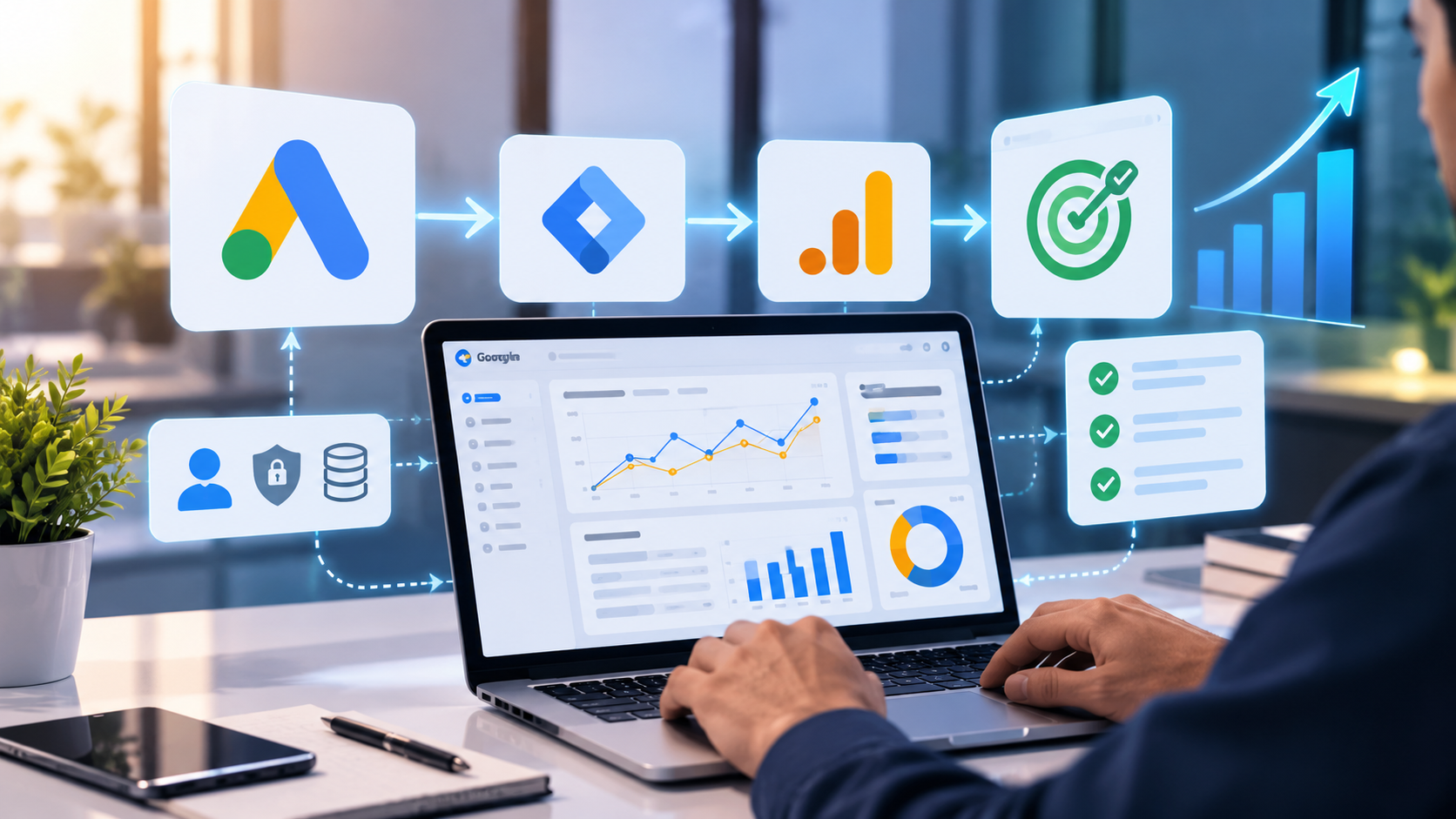
Advertisers don’t see conversations either. They get aggregate performance data such as impressions and clicks, not individual chats, memories or personal details. For measurement, web conversions can be passed back through a JavaScript pixel and a Conversions API, both introduced in May 2026 alongside self-serve access and cost-per-click bidding. That has real consequences:
- You can’t build retargeting audiences from chat behaviour.
- You’ll rely on your own first-party tracking to judge quality.
- Clean conversion setup matters more than ever.
What this means for the SEM-versus-AI-ads debate
Don’t frame this as ChatGPT replacing Google. They do different jobs. Google still captures people who know what they want to search for. ChatGPT reaches people in the middle of working out what they want, comparing options and asking for recommendations, often before they ever type a product keyword.
That makes it a discovery and consideration channel with strong intent signals. Treat it as an addition to your mix and don’t pull budget from proven search campaigns to fund it.
Categories that are off limits
Some verticals are excluded or restricted, including politics, health and mental health, financial services, dating, and regulated medical products. If you sell in fintech or healthcare, check the current policies before planning anything.
The risks
- Trust. If users feel recommendations are getting commercial, the whole platform loses value. OpenAI has built its model around saying ads don’t influence answers, and that promise has to hold.
- Measurement gaps. Less audience data and aggregate-only reporting mean you can’t diagnose as deeply as on Google or Meta.
- Unknown benchmarks. The channel is under a year old, so there is little reliable data on CPCs, conversion rates or how results vary by category.
- Audience skew. Free and Go users aren’t the same as paying subscribers, so check that they match your customer.
How to approach it
Start with a small, structured test. With low daily minimums, you don’t need a big commitment. Pick one product line, set a clear conversion goal, and run it long enough to learn something. Resist judging it after a few days.
Get your tracking ready first. Install the pixel and the Conversions API properly, and tie conversions to real outcomes (purchases, qualified leads), not shallow events.
Write for questions, not keywords. Your messaging and landing pages should answer the kind of question a person would actually ask: comparisons, budgets, “which is best for…”. Clear, specific, honest pages will do better than generic promotional copy.
Use your first-party data. The stronger your own customer data and conversion feedback, the better you can judge whether this channel brings in valuable customers.
Don’t wait for ads to start on AEO
Whether or not you buy ads, AI assistants are already shaping which brands get recommended. Answer engine optimisation (AEO) is the organic side of the same shift:
- Publish Q&A-style content and honest comparison pages.
- Write detailed, accurate product descriptions.
- Build authority through credible mentions and backlinks.
- Track AI referral traffic in your analytics.
Paid and organic visibility inside AI platforms will increasingly work together.
The bottom line
ChatGPT Ads started as an exclusive, expensive experiment. It is now a self-serve channel in most major markets, including India. The early lesson is that this is about intent in conversation, not keyword matching, and the brands that learn how it behaves now will be better placed when it matures.
Test it small, measure it carefully, and keep your search budget doing what it already does well. The shift from “search and click” to “ask and decide” is happening, and it’s worth learning to work with it.
FAQ
Yes. Self-serve access is now live in India with low daily minimums, which changes the early premium-only picture.
They rely mainly on context. Personalisation is optional for users, and advertisers only get aggregate data.
They do different jobs. Google is strongest for search-driven demand, while ChatGPT reaches people earlier, in conversation.
Optimising your content so AI assistants recommend and cite your brand in their answers.