







It’s Black Friday weekend, and somewhere a media buyer is staring at a dashboard, watching return on ad spend (ROAS) climb and wondering whether any of it is real. Meanwhile, a shopper has asked an AI assistant to “find me a good pair of running shoes under ₹8,000 that arrive before Monday.” The assistant never showed her a single ad. It compared options, read reviews, and put one product in her cart.
If that scenario makes you uneasy, good. Performance marketing is being rewritten in real time, and the marketers who thrive will be the ones who understand what’s changing and what isn’t.
What Performance Marketing Actually Is (and Why It Won)
Performance marketing means paying for measurable outcomes rather than impressions or vague “awareness.” You pay per click, per lead, per install, or per sale. Google Ads, Meta campaigns, affiliate programs, and influencer deals with tracked codes all fall under this umbrella.
Its appeal is simple: accountability. Every rupee or dollar can, in theory, be traced to a result. For startups with thin budgets and CFOs who ask hard questions, that was revolutionary. It turned marketing from a cost center into something that looked like a machine: put money in, get customers out, adjust the dials.
But the machine depends on three things: people searching, people scrolling, and platforms that can track what happens next. All three are shifting at once.
Shift One: AI Is Changing How People Discover Products
For two decades, discovery meant typing keywords into a search bar and picking from a list of results. Performance marketers built entire careers on bidding for the top of that list.
Now more people start with conversational AI. They ask a question, get a synthesized answer, and often never visit ten websites. Search engines themselves are putting AI-generated summaries above traditional results, which changes where attention lands and which clicks still happen.
This has two consequences for performance marketers:
Fewer clicks, higher intent. When AI answers the simple questions, the people who still click tend to be further along in their decision. Traffic volume may fall while conversion quality rises. If you only judge campaigns by click volume, you’ll misread the story.
Being “recommendable” matters as much as being “biddable.” AI systems draw on product data, reviews, brand mentions, and structured information across the web. A brand with clean product feeds, authentic reviews, and consistent information is more likely to be surfaced. This is why people are talking about generative engine optimization (GEO), the practice of making your brand legible and trustworthy to AI systems, as a sibling to SEO.
Shift Two: Agentic Commerce Is Arriving
The bigger leap is from AI that answers to AI that acts. Shopping agents that compare prices, check delivery times, and complete purchases on a user’s behalf are moving from demo to early reality, with payment companies and platforms building the plumbing for it.
Think about what this does to a funnel built around persuasion. A banner ad’s emotional hook means little to an agent evaluating specifications. A countdown timer creating false urgency won’t move software that checks whether the discount is real.
Marketers will increasingly need to ask two questions: how do we persuade the human, and how do we qualify for the agent? The agent cares about:
- Accurate, up-to-date product data (price, stock, shipping, return policy)
- Verifiable reviews and reputation signals
- Transparent pricing without hidden fees
- Fast, reliable fulfillment
In other words, the fundamentals of being a good business suddenly become a performance marketing lever. It’s an uncomfortable truth for anyone who relied on clever creative to cover a mediocre product.
Shift Three: Measurement Is Foggier Than Ever
Privacy regulation, browser restrictions, and platform policies have steadily eroded the tracking that made performance marketing feel so precise. Attribution, the art of deciding which touchpoint deserves credit for a sale, has become a probabilistic exercise rather than a clean ledger.
Smart teams are responding by moving beyond last-click thinking:
First-party data is the new foundation. Email lists, app users, loyalty members, and purchase history belong to you. They don’t vanish when a platform changes its rules. Brands that invest in genuine value exchange, giving customers a reason to share their data, will own the most durable asset in marketing.
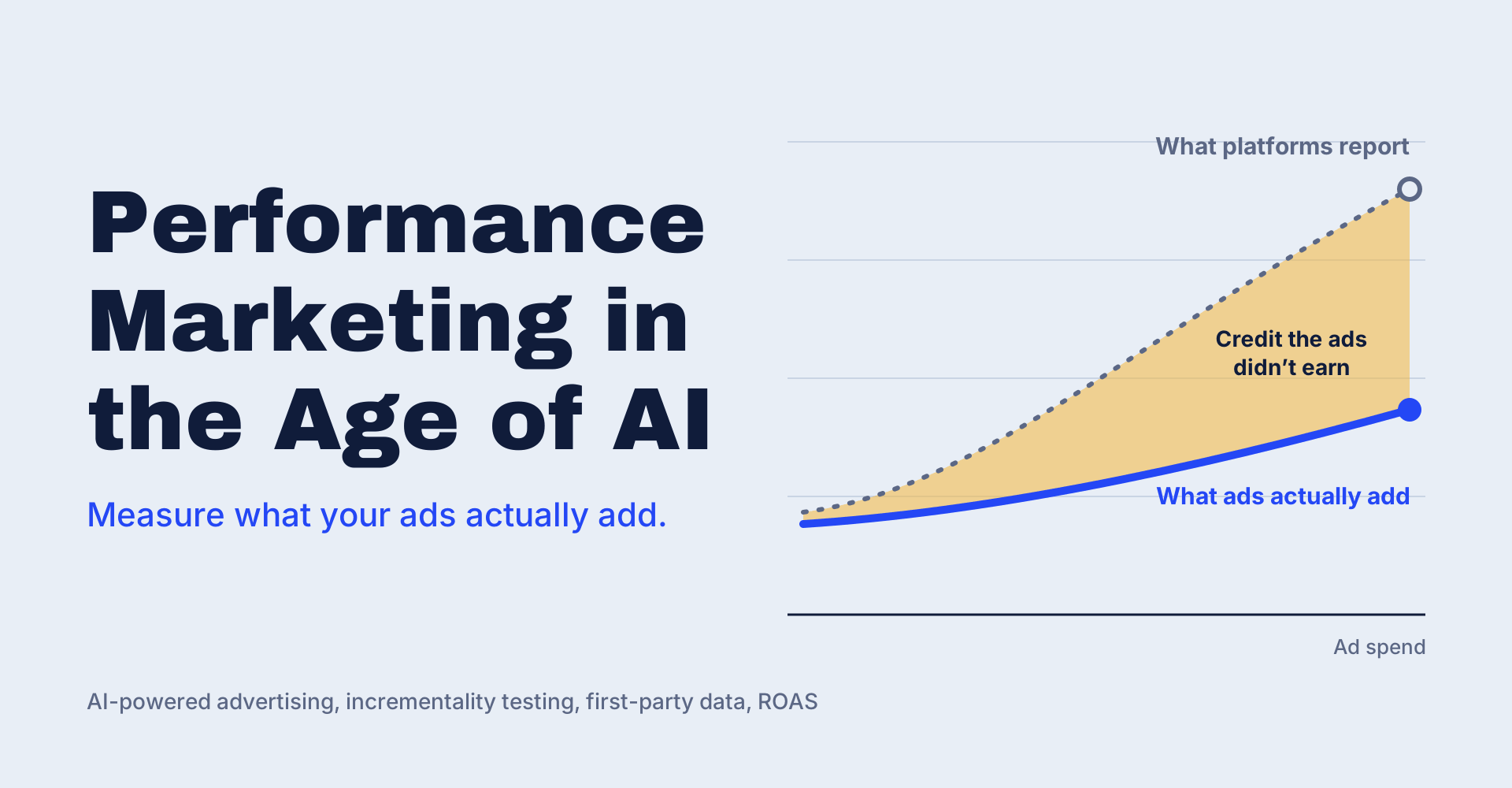
Incrementality testing over blind trust. Instead of asking “which ad got credit?”, ask “what would have happened without this spend?” Geo-holdout tests and controlled experiments reveal whether your retargeting campaign is creating sales or just claiming ones that were already going to happen. Many teams discover that a chunk of their “best performing” spend is simply harvesting existing demand.
Marketing mix modeling is back. Once considered a slow, enterprise-only technique, statistical modeling of how channels contribute to overall sales has returned because it doesn’t rely on individual-level tracking. Lighter, faster tools have made it accessible to mid-sized brands.
Shift Four: Creative Is the New Targeting
As platforms automate targeting and bidding, the levers marketers once pulled manually, such as audience selection and bid adjustments, matter less. Meta’s and Google’s algorithms increasingly decide who sees what. What you control is the creative and the offer.
That’s why the best performance teams now behave like content studios. They produce a high volume of varied creative, test hooks and formats quickly, and let the data reveal what resonates. Short-form video, creator-led content, and user-generated testimonials tend to outperform polished studio ads because they feel native to the feed.
AI tools make this production faster and cheaper, which is a double-edged sword. When everyone can generate a hundred ad variations in an afternoon, volume stops being an advantage. What stands out is a genuine insight about the customer, a distinct brand voice, and proof that real people use and like the product. Authenticity is becoming the scarce resource.
So What Should Performance Marketers Actually Do?
Here is a practical playbook for the next twelve months.
1. Audit your product and brand data. Make sure feeds, descriptions, pricing, and policies are accurate and consistent everywhere. This helps your ads, your search visibility, and any AI system that evaluates you.
2. Invest in reviews and reputation. Encourage honest customer reviews and respond to criticism. Reputation signals feed both human trust and algorithmic recommendation.
3. Build your first-party data engine. Offer something worth exchanging an email for: early access, useful content, loyalty rewards. Treat the list as an asset, not an afterthought.
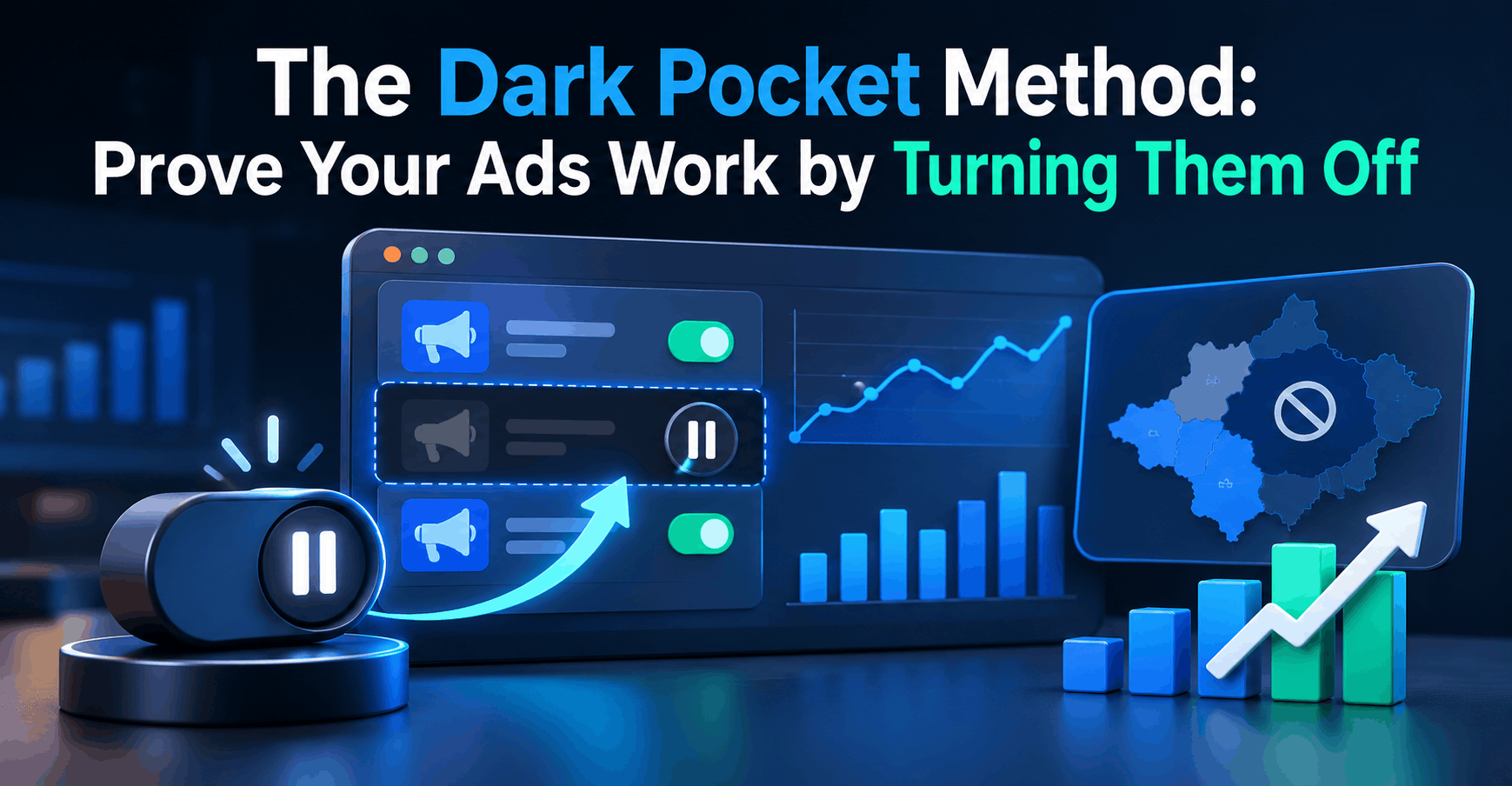
4. Test incrementality quarterly. Pick one major channel, pause or reduce it in a controlled way, and measure the real impact. The results will often reallocate your budget more effectively than any dashboard.
5. Shift budget toward creative production. Hire or train for storytelling, video, and creator partnerships. The algorithm will handle the rest, but it can only optimize what you feed it.
6. Track blended metrics. Look at overall marketing efficiency ratio, customer acquisition cost against lifetime value, and revenue across all channels, not just platform-reported ROAS, which each platform grades in its own favor.
7. Stay curious about AI surfaces. Monitor how your brand appears when you ask AI assistants about your category. If competitors are recommended and you aren’t, find out why.
What Won’t Change
Amid all this disruption, some truths hold steady. People still buy from brands they trust. Value for money still wins. A great product with fair pricing and honest communication still beats a mediocre one with a huge ad budget, and that advantage may grow as AI makes comparison effortless.
Performance marketing was never really about clicks. It was about connecting the right offer to the right person at the right moment, then proving it worked. The channels will keep changing, and the “person” may sometimes be a piece of software acting for a person. The discipline of measuring, testing, and improving stays the same.
The marketers who struggle will be those who treat the dashboard as reality. The ones who succeed will treat it as a rough map, test what it claims, and keep their attention on the real human at the end of the chain, even when an agent is the one holding the cart.
So this Black Friday, by all means watch your ROAS. Just ask yourself the harder question too: if the algorithm and the AI assistant both vanished tomorrow, would customers still choose you?