






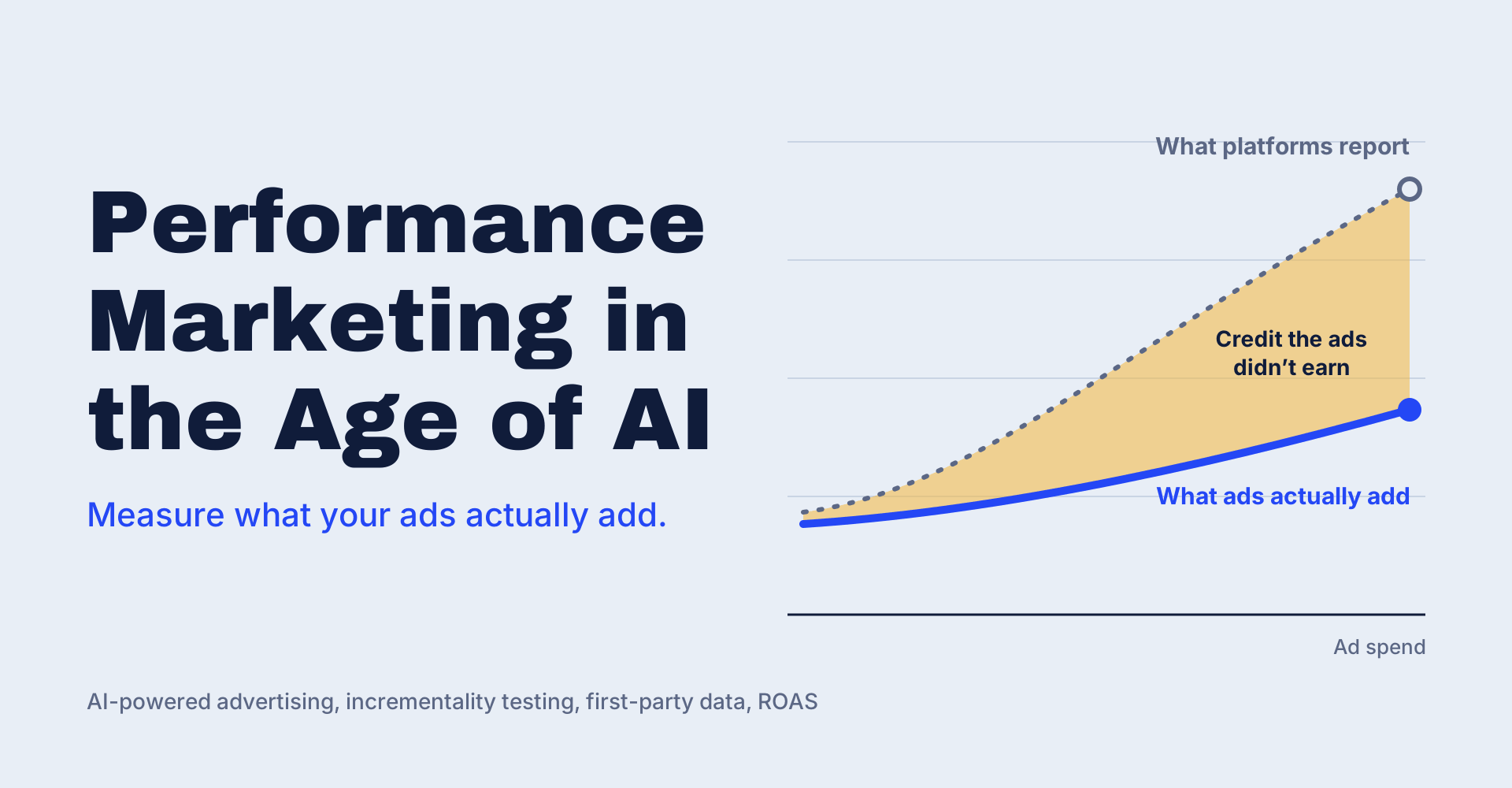

Performance marketing has a quiet credibility problem. Your dashboard says the campaign delivered a 6x return on ad spend. Your finance team says revenue grew by far less than that. Both numbers are “correct,” and yet they cannot both describe reality.
The gap between them has a name: incrementality. It is the difference between sales your ads caused and sales that would have happened anyway. Most teams know the concept. Very few build their daily operations around it, because measuring it feels expensive, slow, and statistical.
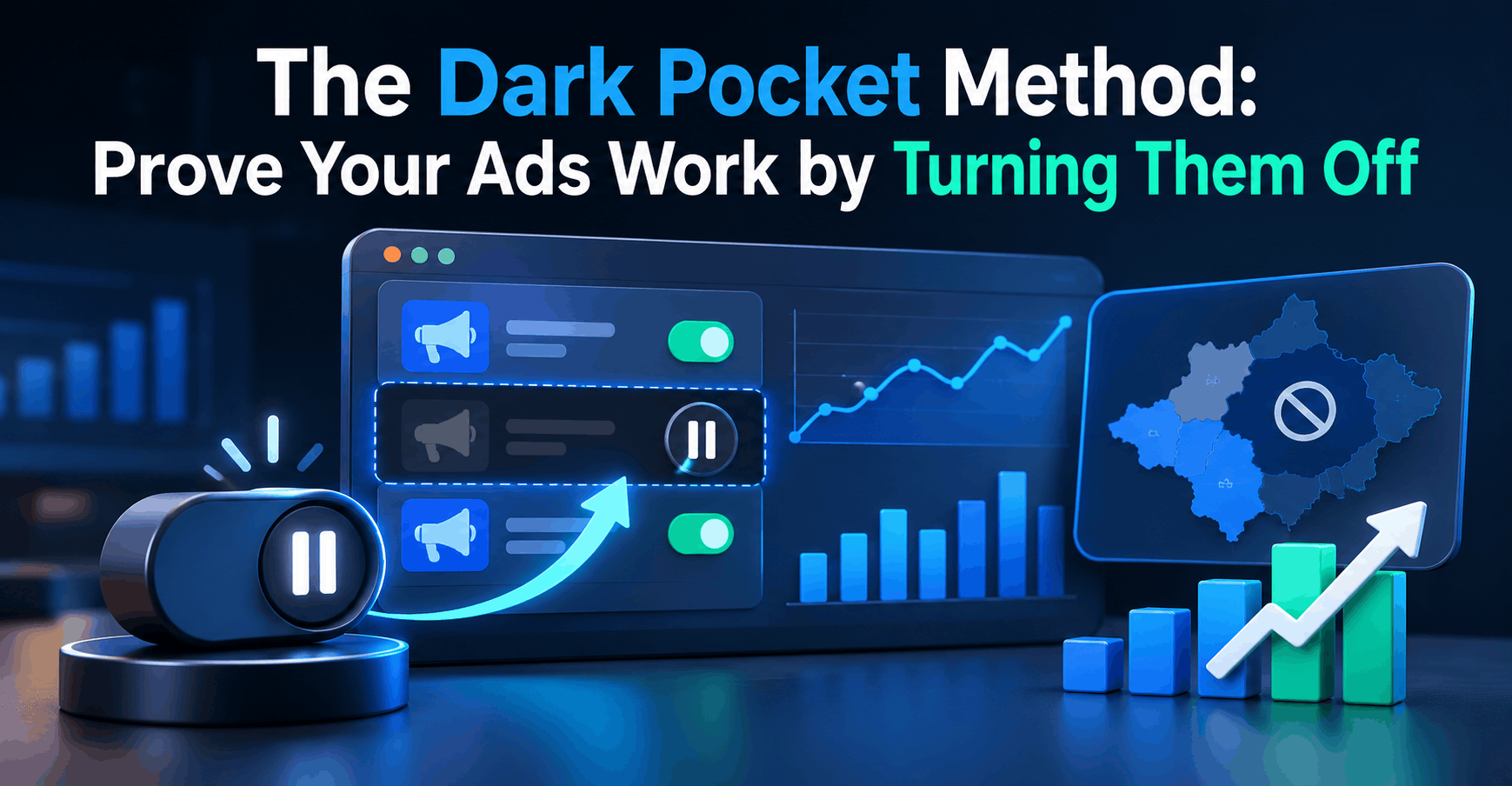
This post introduces a simple, unusual practice called the Dark Pocket Method. The idea: deliberately switch off small, carefully chosen slices of your advertising on a rotating schedule, and let the silence tell you what your ads are really worth.
The Attribution Illusion
Every ad platform grades its own homework. Meta, Google, TikTok, and the rest each claim credit for conversions that touched their ads. Add up the platform-reported numbers and you will often find they claim more sales than your business actually made.
The core issue is that attribution models answer the question “who touched this customer?” instead of “who changed this customer’s mind?” A person who already loved your brand, searched for it by name, and clicked a branded search ad was going to buy regardless. Your dashboard records a win. Your bank account records nothing extra.
This is not a small distortion. Brand search, retargeting, and email-triggered campaigns are the most frequent offenders. They sit at the very end of the buying journey, so they collect credit for decisions made weeks earlier. Their reported ROAS looks spectacular precisely because they are harvesting demand rather than creating it.
The usual fix is a big, formal experiment: geo holdouts, conversion lift studies, or marketing mix modeling. These are valuable, but they are heavy. They need budget, patience, and often a data scientist. As a result, many teams run one test a year and then go back to trusting the dashboard.
The Dark Pocket Method takes the opposite approach: make small experiments so cheap and routine that they become part of how you work.
What Is a Dark Pocket?
A Dark Pocket is a small, defined slice of your advertising that you intentionally turn off for a fixed period, while keeping a comparable slice running as a control.
The pocket can be defined in several ways:
- Geographic: pause ads in a handful of cities or postal regions
- Audience: exclude a random 5 to 10 percent of a retargeting list
- Channel: pause one campaign type, such as branded search, for two weeks
- Product: stop promoting one product category while the rest continue
- Time: switch off ads during specific day parts and compare to adjacent windows
The key rules are that the pocket is small (typically 5 to 10 percent of total spend or reach), temporary (one to four weeks), and chosen in advance rather than picked after the fact because it looked convenient.
Think of it as a smoke detector test. You do not burn the house down to check the alarm works. You press a button and see what happens.
Running Your First Dark Pocket in Five Steps
Step 1: Pick the suspect
Start with the campaign you suspect is over-credited. Branded search and retargeting are the classic first candidates, because their reported returns are the most likely to be inflated. If your reported ROAS on a campaign is dramatically higher than your blended business ROAS, that gap is a flashing sign.
Step 2: Write down your prediction
Before you switch anything off, record what you expect to happen. For example: “If we pause branded search in these four regions, I expect sales to fall by 20 percent.” This step matters more than it seems. It exposes your own assumptions and, later, shows you how well your intuition matches reality.
Step 3: Match your pocket to a control
Choose a dark region and a similar region that stays on. Similar means comparable size, seasonality, and historical sales patterns. The cleaner the match, the more you can trust the comparison. Where possible, pick them randomly from a pre-matched list so you are not tempted to cherry-pick.
Step 4: Go dark and watch
Turn the ads off for the agreed window. Track total sales, not platform-reported conversions, in both the dark and control areas. Use your own order data, your payment processor, or your CRM. The whole point is to step outside the platform’s self-reporting.
Step 5: Compare and log
After the window closes, compare the change in the dark pocket against the control. If sales in the dark region barely moved, the campaign was mostly harvesting existing demand. If they dropped sharply, the campaign is doing genuine work.
The Pocket Ledger: Turning Experiments into a Habit
A single test is a data point. A series of tests is a competitive advantage. That is why the second half of this method is a simple shared document called the Pocket Ledger.
Each row records:
- The campaign or channel tested
- The dates and size of the pocket
- Your written prediction
- The actual result
- The Incrementality Score: the percentage of reported conversions that truly disappeared when ads went dark
- The decision you made afterward
The Incrementality Score is the heart of the ledger. Suppose the dashboard reported 1,000 conversions from a campaign in the dark region during a normal period, and when you switched it off, true sales dropped by only 150. The score is 15 percent. That campaign’s claimed ROAS should be multiplied by 0.15 to find its real, incremental return.
Over a few months, the ledger becomes a map of your business. You discover that some channels deserve more budget than they receive, and others have been quietly coasting on credit they did not earn. You also build something valuable: a set of correction factors you can apply to dashboard numbers every day, so reporting reflects reality without running a new test each time.
A Quick Illustration
Imagine an online skincare brand spending a monthly budget across branded search, prospecting video ads, and retargeting. Platform dashboards report a blended 5x ROAS, and the team is considering a budget increase.
They run three Dark Pockets over two months. Pausing branded search in a set of regions reduces sales by only 8 percent. Excluding a slice of the retargeting audience lowers sales by 22 percent. Pausing prospecting video in a third group of regions cuts new-customer sales by 41 percent.
The lesson is uncomfortable and extremely useful. Branded search, which looked like the star, was mostly capturing people who would have bought anyway. Video, which looked mediocre on last-click reports, was quietly feeding the entire funnel. The team moves money from branded search into prospecting, keeps retargeting at a moderate level, and sees total revenue rise without increasing the overall budget.
No giant study was required. Just three small, well-defined silences.
Common Pitfalls and How to Avoid Them
Going dark too long. A pocket that runs for months starts costing real revenue. Keep windows short and pockets small. The goal is a signal, not a sacrifice.
Ignoring seasonality. A holiday week in one region but not another will contaminate your comparison. Choose windows where both groups face similar conditions, and avoid launching tests during major promotions.
Contamination between groups. If customers in your dark region can still see your ads through national campaigns, or travel to the control area, the effect will be muted. Account for this in how you define the pocket.
Reading noise as insight. Small pockets can produce wobbly results. Treat a single test as evidence, not proof, and repeat important tests before making dramatic budget moves. The ledger helps here, because patterns across multiple tests are far more trustworthy than any one result.
Letting the team feel punished. Switching off a high-performing campaign, on paper, can feel like sabotage to the people who run it. Frame Dark Pockets as a shared learning tool that makes everyone’s budget smarter, not as an audit of anyone’s work.
Why This Idea Is Different
Most performance marketing advice is about doing more: more creative variations, more audiences, more bid adjustments, more spend. The Dark Pocket Method is about doing less on purpose in order to see clearly.
It also changes the culture of a team. Instead of arguing over whose dashboard to believe, people start asking a better question: “What would happen if we stopped?” That question is the foundation of honest measurement, and it is surprisingly rare in an industry that rewards looking busy.
It is also democratic. You do not need an enterprise analytics stack or a data science department. A spreadsheet, a clear prediction, a matched control group, and a bit of discipline are enough to begin. As the ledger grows, so does your confidence, and so does your ability to defend budget decisions to a skeptical finance team.
Your First Move This Week
If you want to try this, do not overthink it. Pick one campaign you suspect is over-credited. Write down your prediction. Choose a small pocket, ideally 5 to 10 percent of the audience or a few comparable regions, and a matched control. Run the test for two weeks, compare actual sales rather than platform conversions, and log the result.
You may find the campaign is a quiet hero. You may find it is a free rider. Either way, you will know something your dashboard could never tell you.
Final Thought
Performance marketing promises accountability, but accountability depends on honest counterfactuals: what would have happened without the ad? The Dark Pocket Method makes that question practical, repeatable, and cheap enough to ask every month.
Sometimes the smartest growth strategy begins with a little darkness. Turn off a small piece, watch carefully, and let the silence show you where your money truly works.