






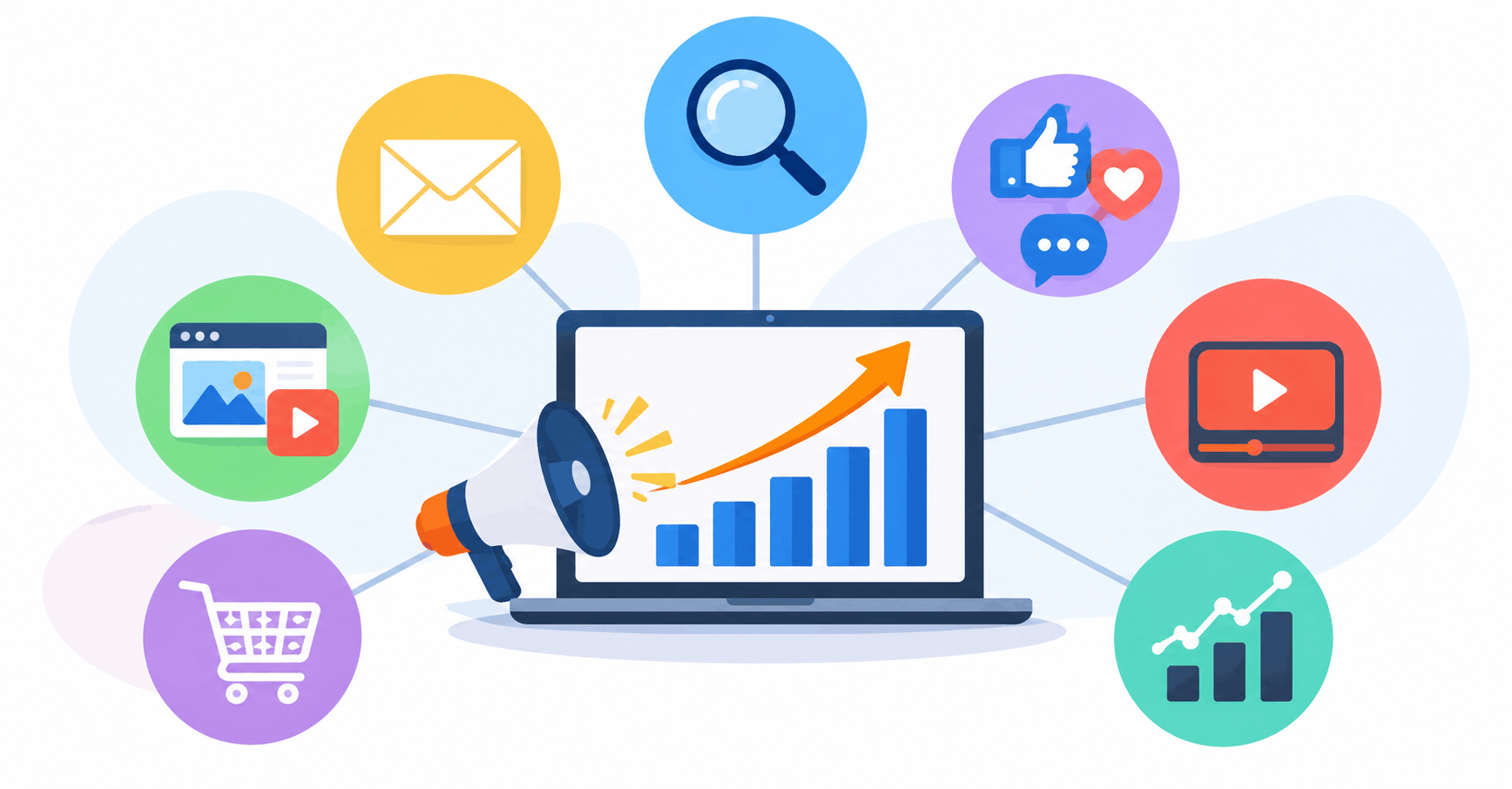
Customers now find businesses through search engines, social feeds, inboxes and online reviews, often before they ever speak to a salesperson. Digital marketing is how a business shows up in those moments.
The term covers a lot of ground, though. Here are the seven core types, what each does best, and how to decide where to start.
1. Content Marketing
Content marketing means creating useful material, such as blog posts, videos, podcasts, guides, and case studies, that your audience actually wants. You aren’t pitching in every piece. You’re answering questions and solving problems so people come to trust you.
Why it matters: Good content builds authority and keeps your brand familiar, so when someone is ready to buy, you’re already on their shortlist. It also feeds almost every other channel on this list.
Quick tip: Write for the questions your customers ask before they buy, not for what you want to say about yourself.
2. Website Marketing
Your website is the hub where every other channel sends people. Website marketing is the practice of making that hub convert: fast loading, easy navigation, mobile-friendly design, clear calls to action, and pages that match what visitors came looking for.
Why it matters: Traffic is wasted if the site is confusing or slow. Start by looking at what works now. If most visitors who reach your contact page book a consultation, your problem is traffic, not conversion, and you should focus your effort accordingly.
Quick tip: Check your site on a phone first. Most visitors will see that version.
3. Search Engine Optimization (SEO)
SEO is the work of earning higher rankings in search results so people find you without you paying per click. A solid strategy rests on a few pillars:
- Technical SEO: site speed, crawlability, secure and clean structure
- On-page SEO: titles, headings, keywords, and well-organized content
- Content strategy: pages built around what people search for
- Link building: earning mentions from credible websites
- User experience: keeping visitors engaged rather than bouncing
Why it matters: Organic traffic compounds. A page that ranks well can bring in visitors for months or years. The tradeoff is patience, as results usually take a few months to show.
4. Social Media Marketing
Social media marketing is about building a community and a presence on platforms like Instagram, LinkedIn, Facebook, YouTube, and X. Platforms and trends change constantly, so it’s smarter to lean on habits that always work:
- Post consistently, with a clear idea of who you’re talking to
- Reply to comments and messages quickly
- Mix educational, entertaining, and promotional content
- Show the people and process behind your brand
Why it matters: Done well, social media generates leads, raises awareness, and gives customers a human way to connect with your business.
5. Email Marketing
Email is one of the most cost-effective channels available, mainly because you own the list. You don’t depend on an algorithm to reach your audience. Welcome series, newsletters, product announcements, abandoned-cart reminders, and re-engagement campaigns all fall under this heading.
Why it matters: It’s ideal for nurturing leads and retaining customers, and the data you collect (opens, clicks, replies) tells you what your audience cares about.
Quick tip: Segment your list. A message tailored to a smaller group almost always beats a generic blast to everyone.
6. Social Media Advertising
Where social media marketing is organic, social media advertising is paid. You pay platforms to put your message in front of precisely targeted audiences, filtered by interests, location, behavior, job title, and more.
Why it matters: Paid social lets you reach people who’ve never heard of you and speeds up brand recognition. It also pairs well with organic posting. Regular, genuine engagement builds credibility, and ads amplify it to a wider audience.
Quick tip: Test several creatives with a small budget first, then put more money behind the ones that perform.
7. Google Advertising (Google Ads)
Google Ads places your business at the top of search results, on YouTube, and across millions of partner sites. With search ads, you reach people at the exact moment they type in what you sell, which makes this one of the highest-intent channels available.
Why it matters: It works for businesses of every size, delivers results quickly, and is highly measurable. You can see what each click costs and which ads lead to sales.
How to Choose Where to Start
You don’t need all seven at once. A practical way to prioritize:
- Need results fast? Start with Google Ads or social media advertising.
- Building for the long term? Invest in SEO and content marketing.
- Already have customers? Email marketing helps you keep them and encourage repeat purchases.
- Traffic is fine, but sales are low? Fix your website first.
The strongest strategies connect these channels. Content feeds SEO, social, and email. Ads bring people to a website built to convert. Email brings them back.
Final Thoughts
Digital marketing isn’t one tactic but a toolkit. Understand what each type does, match it to your goals and budget, measure the results, and adjust. Start with two or three channels, do them well, and expand as you learn what works for your audience.