





For years, digital advertising has sold marketers one big promise: the right message, to the right person, at exactly the right moment. It’s a seductive pitch. Unlike a billboard or a TV spot, every impression supposedly lands in front of someone who wants what you’re selling.
But if you’ve run campaigns long enough, you’ve probably noticed that the reality is messier. Audiences that look perfect on paper underperform. Campaigns that “shouldn’t” work, with broad settings and little segmentation, quietly deliver. So how precise is ad targeting, really? And if it’s less accurate than we’ve been told, where should your effort go instead?
The Promise vs. the Reality
Targeting feels scientific. You pick an age range, layer on a few interests, add a lookalike audience, and the platform appears to hand you a neatly defined group of buyers. The dashboard shows reach numbers, demographic breakdowns, and projected results, all of which create a sense of control.
The problem is that the data underneath is often far shakier than the interface suggests. Most audience segments are built from signals that are inferred, outdated, or loosely connected to actual buying intent. Someone who clicked on a hiking article two years ago may still be labeled an “outdoor enthusiast.” A person who researched a mattress once might be flagged as an “in-market” shopper for weeks after they’ve already bought one.
Add shared devices, people who browse across several accounts, and privacy changes that have limited tracking, and the picture gets blurrier still. You aren’t targeting people so much as targeting a statistical guess about people.
Why Interest Groups Mislead
Interest-based segments are some of the most commonly used and least trustworthy tools in a marketer’s kit. They rest on the idea that past behavior neatly predicts future purchases, and that platforms can classify that behavior accurately. Neither assumption holds up well.
There’s also a subtler trap: a segment that performs well isn’t necessarily a segment that describes your customer. Say an interest group delivers a strong return in a campaign. It’s tempting to conclude “this is who our buyers are.” But the platform may simply have found people likely to click or convert within that bucket, and those people may look nothing like your broader customer base. Treating campaign performance as audience insight can send your strategy in the wrong direction.
The Rise of Broad Targeting and Machine Learning
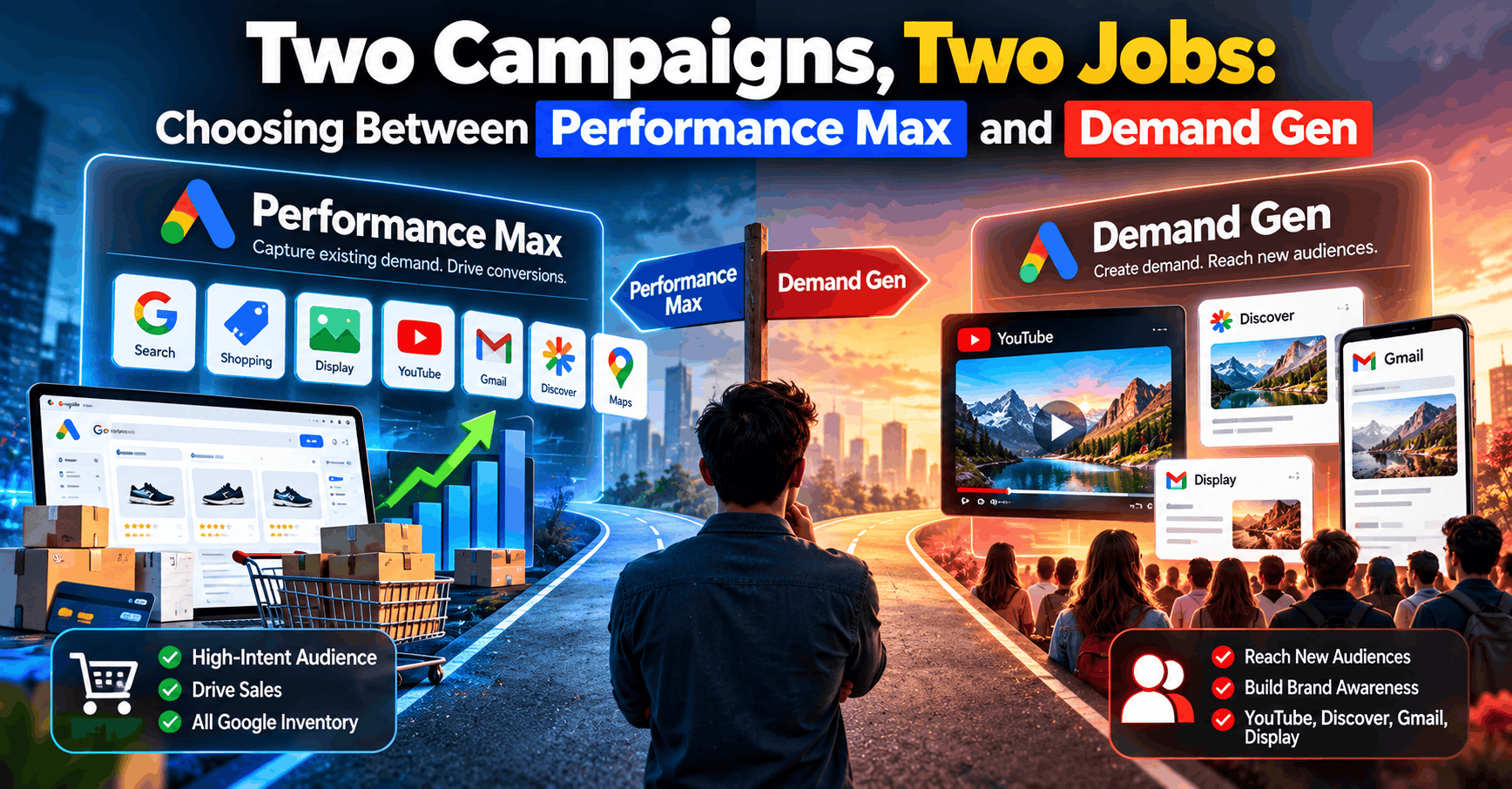
Platforms have noticed the limits of manual targeting, which is why they’ve shifted toward automation. Meta’s Advantage+ and Google’s Performance Max both lean on machine learning to find likely converters, rather than relying on the narrow audience definitions marketers once built by hand.
Many advertisers have responded by going broad: fewer restrictions, minimal interest layering, and trust in the algorithm to find the right people. And in many cases, it works better than the carefully engineered audiences of the past.
But automation isn’t a free lunch.
The machine is only as good as its signal
Machine learning optimizes toward whatever you tell it to value. If your conversion event is a page view, a low-intent click, or a form fill that rarely turns into revenue, the algorithm will happily find more of those. It isn’t optimizing for business growth; it’s optimizing for the metric you gave it. The result can be a campaign that looks efficient in the platform while doing very little for the bottom line.
The black box problem
Automated bidding and placement also reduce visibility. Advertisers often don’t know exactly where their ads are running or why a particular bid was placed. In the worst cases, budgets get spent on low-quality placements, and some advertisers end up paying surprisingly high CPMs for a handful of impressions on sites that deliver little value. When the system is a black box, waste is hard to spot until it has already added up.
How to Approach Targeting More Realistically
None of this means targeting is useless. It means it should be treated as one input among several, rather than the engine of your entire strategy. Here are a few principles that help.
1. Simplify. Over-engineered targeting, with stacks of interests, behaviors, and exclusions, often shrinks your audience without improving its quality. A simpler setup paired with strong creative frequently outperforms a complicated one, and it gives the algorithm room to learn.
2. Be careful with exclusion lists. In programmatic buying especially, trying to block bad placements one at a time is a losing game. There are always more poor-quality sites than you can list. Inclusion lists, made up of pre-vetted, high-quality placements, give you tighter control over where your money goes.
3. Audit your conversion signals. Look closely at what you’re asking the platform to optimize for. Are those events genuinely tied to revenue, or are they easy-to-hit proxies? Feeding the machine better signals is one of the highest-leverage fixes available.
4. Don’t assume exclusions work perfectly. Many marketers exclude existing customers to focus on acquiring new ones. That’s sensible, but it doesn’t guarantee you’re only reaching new people. Matching is imperfect, and tests suggest that customer exclusions shift who you reach only modestly. Verify rather than assume.
Creative: The Targeting You Can Actually Control
If audience precision is eroding, what takes its place? Increasingly, the answer is creative.
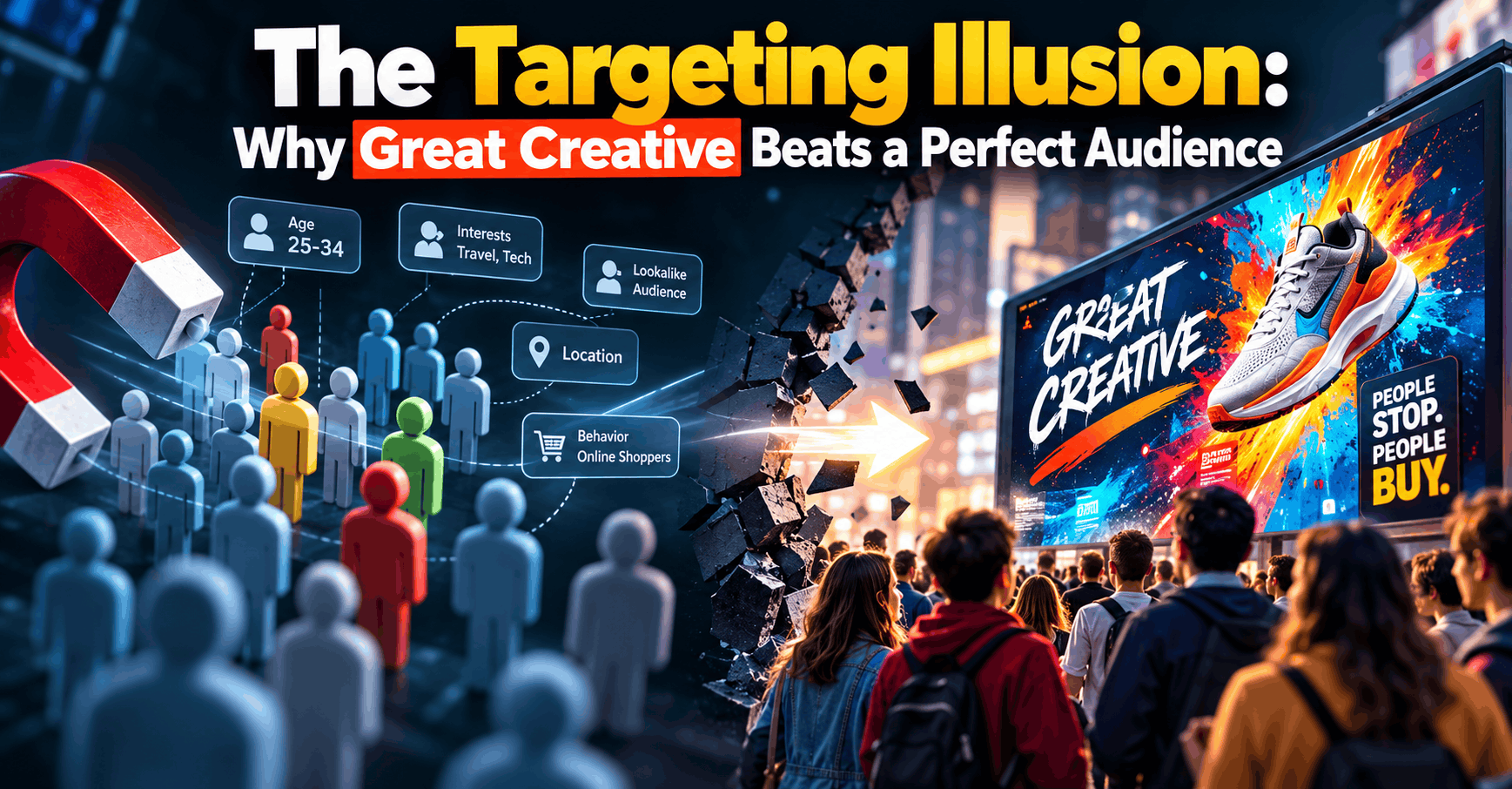
Think about what strong creative does. A clear, distinctive ad speaks directly to a particular kind of person and lets everyone else scroll past. In effect, the audience self-selects. Instead of relying on a platform to guess who’s interested, your message does the filtering for you.
That’s a meaningful shift in where marketers should invest. When targeting signals are noisy, the quality of the message becomes the most reliable lever left. A relevant, memorable ad can make a broad audience work harder for you, while a forgettable one wastes even the most carefully built segment.
AI can help, but it can’t replace creative nerve
Generative AI has made producing ad variations faster and cheaper, and that’s genuinely useful for testing, resizing, and iterating. But there’s a limit. AI tends to produce the safe, average version of an idea. The creative leaps that make a brand stand out, the unexpected angle or the bold tone, still come from people willing to take a risk.
There’s also a caution about over-personalization. It’s tempting to use AI to tailor every ad to every micro-segment, but if the underlying targeting data is shaky, you may end up personalizing to a guess. Worse, a brand that adapts itself endlessly can lose its identity. Distinctiveness usually builds more long-term value than hyper-customization does. The marketing research behind books like How Brands Grow from the Ehrenberg-Bass Institute makes a related point: reaching a wide pool of potential buyers with memorable, recognizable messaging often matters more than narrowing in on a tiny slice.
Measuring Whether Your Targeting Actually Works
If you can’t trust the platform’s own reporting to tell you whether targeting is effective, you need another way to find out. That’s where incrementality testing comes in.
Incrementality asks a simple but powerful question: would these conversions have happened anyway without the ad? By comparing a group exposed to your campaign with a comparable group that wasn’t, you can see the true lift your advertising creates. Platform-reported conversions often include people who were already on their way to buying, which makes campaigns look better than they are. Incrementality cuts through that.
A few habits make measurement more honest:
- Test, don’t assume. Run holdout or geo-based experiments to check whether a targeting approach delivers real lift.
- Separate performance from persona. A segment converting well doesn’t mean it represents your whole customer base.
- Look beyond clicks. Judge success on business outcomes such as revenue, new customers, and profit, not just platform metrics.
The Bottom Line
Ad targeting isn’t broken, but it isn’t the precision instrument it’s often marketed as. Audience data is noisy, automation optimizes for whatever you feed it, and the tools that promise certainty often deliver something closer to an educated guess.
The smartest response isn’t to abandon targeting. It’s to hold it more loosely. Simplify your setups, scrutinize your conversion signals, keep a close eye on where your spend lands, and test for true incrementality. Then put real energy into what you can control: creative that’s distinctive enough to attract the right people on its own.
In a landscape where precision is fading, the brands that win will be the ones that stand for something, and say it well.