






If your marketing playbook still looks like it did in 2023, you have probably noticed the cracks. Organic traffic behaves differently. Ad costs keep climbing. Customers arrive better informed, more skeptical, and less willing to hand over their data. Meanwhile, AI has moved from a curiosity to something sitting inside almost every tool a marketer touches.
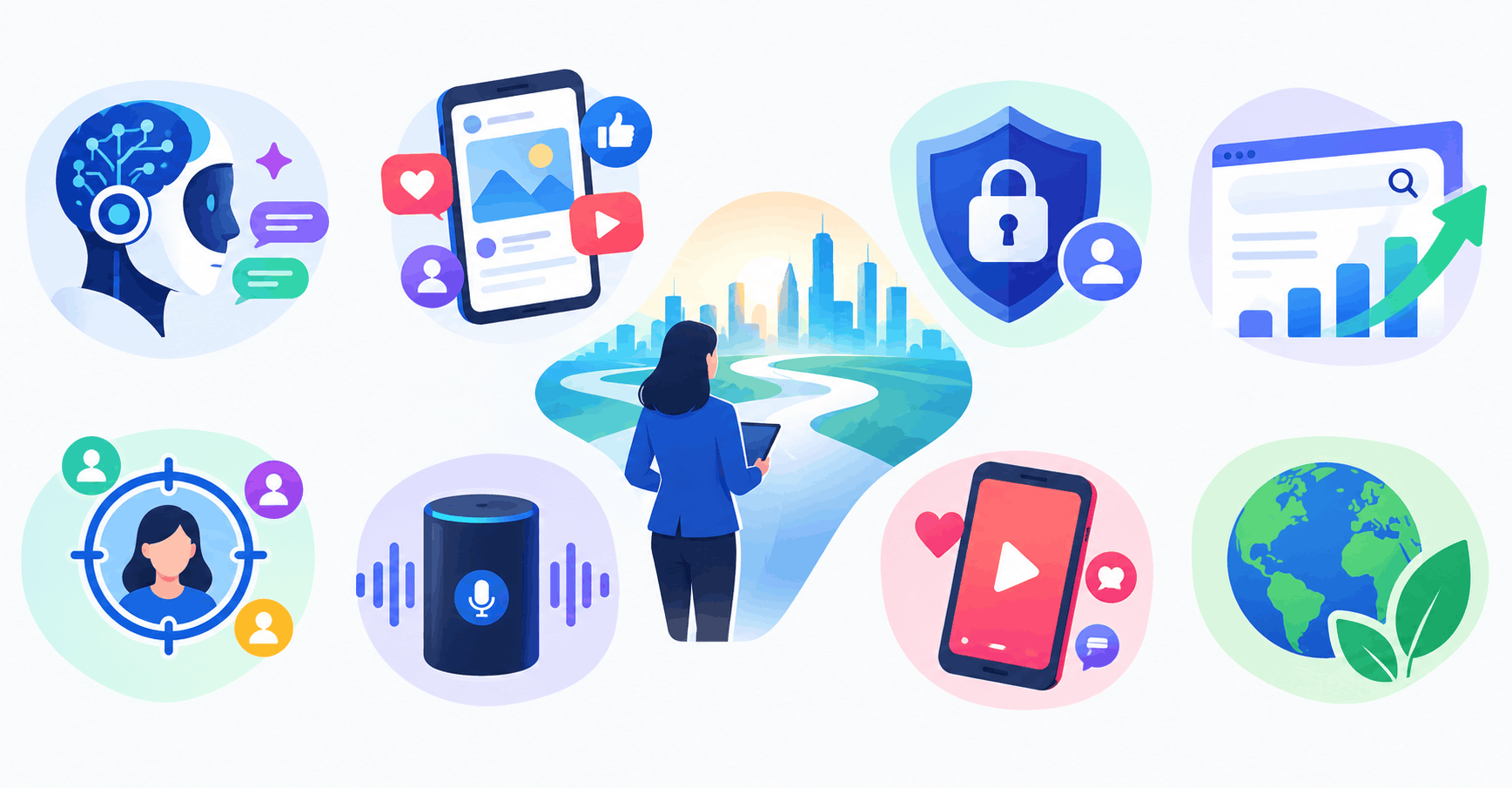
The good news is that these changes are not random. They follow a few clear patterns: people want faster answers, more relevance, and more honesty from brands. Marketers who understand those patterns can adapt calmly instead of chasing every new feature. This guide walks through eight shifts shaping digital marketing in 2026, what each one means in practice, and how to respond without overhauling everything at once.
1. AI Is Now Part of the Everyday Workflow
A couple of years ago, using AI in marketing felt like an experiment. Today it is closer to a basic utility. Teams use it to draft outlines, summarize customer research, generate ad variations, clean up reports, and flag campaigns that are quietly wasting money.
The real advantage no longer comes from using AI at all, since everyone does. It comes from how well you use it. Brands that feed AI tools clear brand guidelines, good customer insight, and honest performance data get useful output. Brands that simply ask for “a blog post about our product” get the same bland copy as everyone else.
A sensible approach is to let AI handle the first draft of repetitive work, such as reporting summaries, subject-line variations, and keyword grouping, while people own the parts that need judgment: positioning, tone, creative direction, and final approval. The teams winning right now are not the ones with the most tools. They are the ones with the clearest process for deciding what machines do and what humans do.
2. Search Is Splitting in Two
For years, search marketing meant one goal: rank as high as possible on a results page. That goal still matters, but it is no longer the whole picture. People now ask questions directly to AI assistants and see AI-written summaries at the top of search results. In many cases they get what they need without clicking anything.
This creates two parallel goals. The first is classic visibility, meaning your pages rank for the queries your customers type. The second is being cited or recommended when an AI system assembles an answer. Marketers have started calling the second discipline generative engine optimization, or GEO, and its close cousin, answer engine optimization.
The good news is that the fundamentals overlap heavily. Content that answers questions clearly, uses descriptive headings, includes structured data, and comes from a recognizable source with real expertise tends to perform well in both worlds. A few habits help:
- Write direct answers to specific questions near the top of a page, then expand with detail.
- Add FAQ sections that reflect how real customers phrase their questions.
- Keep facts accurate and up to date, and name your sources.
- Build depth on a topic rather than publishing scattered, shallow posts.
Expect fewer clicks per impression, but higher-intent clicks when they do happen. Measure success by qualified leads and brand recall, not just sessions.
3. First-Party Data Becomes the Foundation
Third-party tracking keeps getting harder, thanks to browser changes, privacy laws, and shifting consumer attitudes. Brands that built their targeting on borrowed data are discovering how fragile that was. Brands that collected their own data, with permission, are in a much stronger position.
First-party data comes from the relationship you have directly with customers: purchases, email sign-ups, app activity, loyalty programs, surveys, and support conversations. Zero-party data goes one step further, because customers volunteer it, such as telling you their preferences through a quiz or a settings page.
The lesson is simple: give people a reason to share. A skincare brand that offers a short quiz in exchange for a tailored routine, or a retailer that rewards members with early access, collects better data than any tracking pixel ever could. Pair that with clean consent practices and server-side measurement, and you get insights that are both useful and trustworthy. Trust, as it turns out, is a performance metric.
4. Short Video Is a Discovery Engine
Short-form video is no longer just entertainment between messages. It is where a huge share of people first encounter products, ideas, and brands. Instagram, YouTube, TikTok, and even LinkedIn all push short clips because audiences keep watching them.
What works is rarely polished. Clips that teach one useful thing, show a real product in use, or give a quick behind-the-scenes look often beat expensive productions. The first two seconds matter enormously, so lead with the point rather than a logo animation.
For smaller teams, the trick is repurposing. One webinar, customer interview, or product demo can become five or six short clips. Add captions, since many people watch without sound, and keep a consistent format so viewers recognize your content in a crowded feed.
5. Personalization Moves From Names to Moments
Putting someone’s first name in an email subject line used to count as personalization. Customers now expect more: relevant recommendations, sensible timing, and messages that reflect what they actually did or asked for.
Modern personalization responds to behavior. A visitor who read three articles about running shoes should see different homepage content than someone browsing office chairs. A customer who just bought a camera might get a helpful guide on lenses a week later, not a discount on the same camera.
There is a line, though. Personalization that feels helpful builds loyalty, while personalization that feels like surveillance does the opposite. A good test is whether the customer would understand why they are seeing a message. If the answer is “yes, because they told us” or “because they just did this,” you are on solid ground.
6. Creators Get Smaller, Closer, and More Accountable
Influencer marketing has matured. Big celebrity endorsements still exist, but many brands now get better results from micro and nano creators, people with modest followings but tight, trusting communities. Their audiences tend to see them as peers rather than advertisers.
This shift also changes how brands measure partnerships. Instead of paying for reach alone, more marketers tie creator deals to outcomes such as tracked sign-ups, discount code usage, or content that can be reused in ads. Choosing creators becomes a data exercise as much as a creative one: look at engagement quality, audience fit, and the kinds of comments their posts attract.
Authenticity is the currency here. Overscripted posts get ignored. Give creators clear goals and guardrails, then let them speak in their own voice.
7. Agentic AI and Conversational Tools Take On More Work
Traditional automation follows fixed rules: if this happens, do that. Agentic AI is different. These systems can interpret a goal, plan several steps, and carry them out, for example reviewing campaign performance, spotting an underperforming ad set, proposing a budget shift, and preparing the change for approval.
On the customer side, conversational tools are becoming a front door for businesses. AI chat assistants on websites and messaging apps can answer product questions, qualify leads, and guide people toward the right option at any hour.
Both deserve a healthy dose of caution. Autonomous systems still make mistakes, and customers can tell when a chatbot is stuck in a loop. Set clear limits on spending and brand decisions, make it easy to reach a human, and review outputs regularly. Think of these tools as capable junior colleagues: fast and tireless, but in need of supervision.
8. Social Platforms Become Search Engines
A growing number of people, especially younger audiences, now use social platforms to look things up: restaurant ideas, product reviews, how-to guides, travel tips. That changes what “search optimization” means. Your content has to be findable inside these platforms, not just on Google.
In practice, that means using the words customers actually use in captions, on-screen text, and spoken audio, answering common questions in short videos, and encouraging genuine reviews and customer posts. Communities matter here too. Brands that show up consistently in comments, groups, and conversations earn the kind of trust that algorithms and people both notice.
A Practical 90-Day Plan
Knowing the trends is useful, but acting on them is what counts. If you are not sure where to begin, this simple sequence keeps things manageable.
Days 1 to 30: Get your foundations right. Audit your data collection and consent practices. Review your top ten pages for clarity, accuracy, and structure. Pick two or three repetitive tasks where AI could save time, and document how you will check the results.
Days 31 to 60: Build and test. Launch a small short-video series with a consistent format. Add FAQ sections and structured data to your most important pages. Try one new personalization tactic, such as a behavior-triggered email sequence, and compare it against your current approach.
Days 61 to 90: Measure and refine. Look at what actually moved qualified leads, repeat purchases, or branded search interest. Double down on what worked, drop what did not, and set priorities for the next quarter.
The point is not to do everything. It is to learn quickly, keep what works, and avoid spreading yourself thin.
Skills Worth Developing
Whatever your role, a few skills will keep paying off. Learn to read data critically rather than just collecting it. Practice writing clearly, since clear writing helps both people and AI systems. Understand privacy basics so you can make confident decisions. And stay curious about new tools without feeling obliged to adopt each one. A skeptical, test-first mindset is more valuable than any single platform skill.
Final Thoughts
The digital marketing landscape in 2026 can feel crowded, but the direction is surprisingly consistent. Customers want relevance, speed, and honesty. AI helps you deliver the first two at scale, and your own judgment and integrity deliver the third.
Brands that thrive will be the ones that earn permission to use data, create content worth citing, and treat technology as a tool rather than a replacement for thinking. Start small, measure honestly, and keep your customer’s experience at the center of every decision. The trends will keep changing, but that principle will not.