





Digital marketing continues to transform how businesses connect with customers, build brand awareness, and generate revenue. From search engine optimization (SEO) and content marketing to social media advertising, email campaigns, and artificial intelligence (AI), marketers must constantly update their knowledge to stay competitive.
However, keeping up with every platform update, algorithm change, and emerging marketing strategy can be challenging. This is where digital marketing blogs become valuable learning resources. They offer practical guidance, industry insights, campaign examples, and expert recommendations that help beginners and experienced professionals make better marketing decisions.
Whether you are a student exploring digital marketing, a business owner looking to attract more customers, or a professional seeking career growth, following reliable marketing blogs can help you develop relevant skills and discover new opportunities.
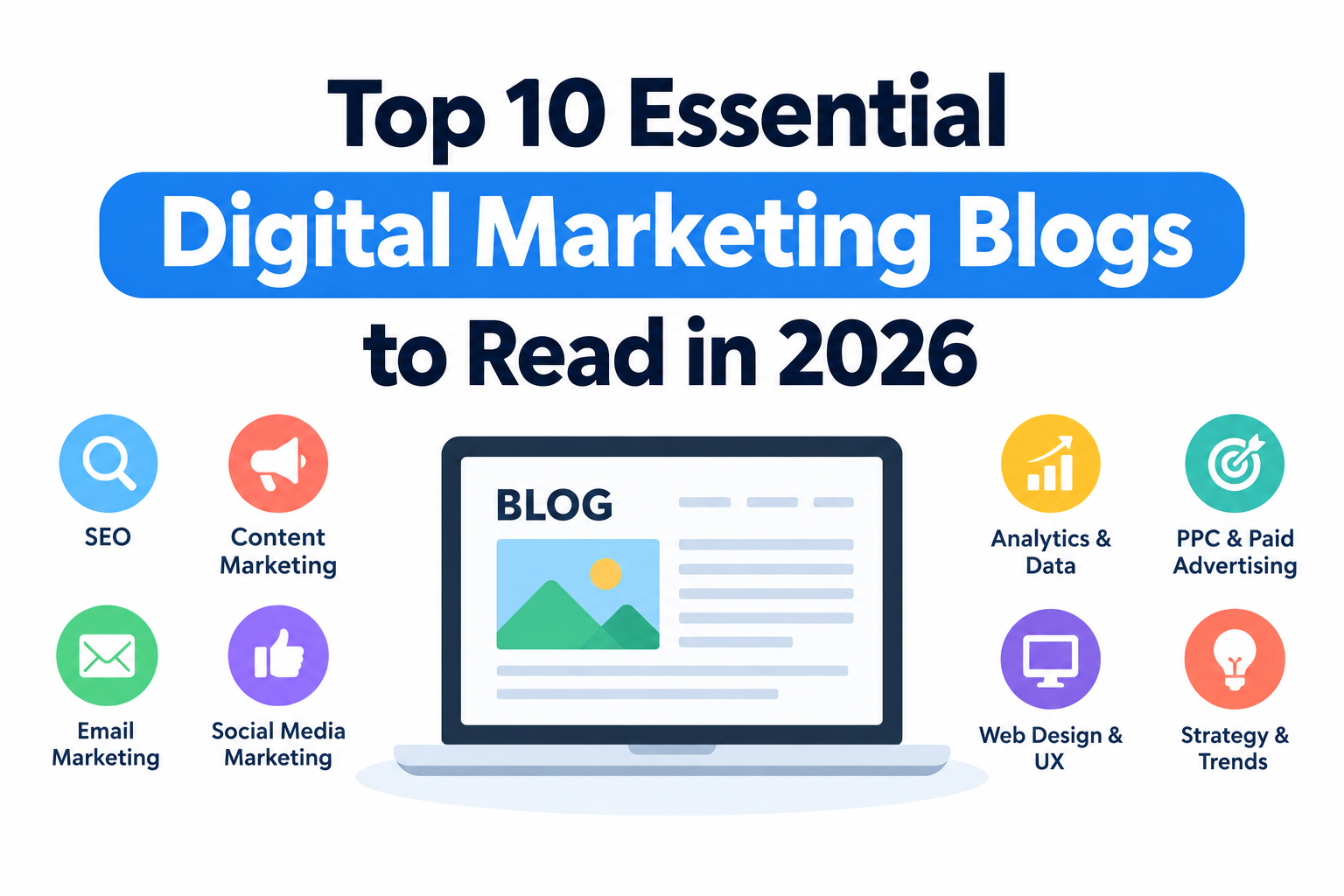
In this guide, we explore 10 of the best digital marketing blogs to follow in 2026, what makes each one useful, and how you can apply their insights to your marketing strategy.
Why Should You Read Digital Marketing Blogs?
Digital marketing is a constantly evolving field. Strategies that delivered excellent results a few years ago may require significant adjustments today. Regularly reading trusted marketing publications helps you understand these changes and respond effectively.
Here are some important benefits of following digital marketing blogs:
- Stay updated with industry trends: Learn about search updates, social media features, AI-powered tools, and changing consumer preferences.
- Improve practical skills: Discover actionable techniques for keyword research, campaign optimization, content creation, and lead generation.
- Learn from real-world examples: Understand how brands and marketing professionals approach challenges and measure results.
- Discover useful tools: Explore platforms that simplify analytics, automation, content planning, and advertising.
- Support career development: Build your knowledge, strengthen your portfolio, and prepare for digital marketing roles.
The most effective approach is to choose resources that match your goals instead of trying to read every article published online.
Top 10 Digital Marketing Blogs to Follow in 2026
1. HubSpot Marketing Blog
Best for: Inbound marketing, content strategy, and marketing automation
The HubSpot Marketing Blog is a useful resource for marketers who want to understand how to attract, engage, and convert potential customers. It covers a broad range of subjects, including content marketing, email marketing, customer relationship management, social media, lead generation, and marketing automation.
Its articles often include step-by-step instructions, templates, and examples that help readers turn marketing concepts into practical campaigns. Beginners can use the blog to understand fundamental concepts, while experienced professionals can explore ways to improve customer journeys and marketing workflows.
HubSpot is particularly valuable for businesses that want to build long-term relationships with their audiences rather than relying entirely on paid advertising.
What you can learn: Inbound marketing, lead nurturing, email campaigns, content planning, and customer lifecycle management.
Website: https://blog.hubspot.com/marketing
2. Moz Blog
Best for: Search engine optimization and organic visibility
Moz is a well-known resource for learning SEO and understanding how websites can improve their visibility in search engines. Its blog covers keyword research, on-page optimization, technical SEO, link building, local search, and content performance.
For businesses that depend on organic website traffic, Moz offers guidance on identifying search opportunities and improving website relevance. Its educational content can also help readers understand technical concepts without requiring advanced programming knowledge.
SEO professionals can use Moz articles to refine their strategies, while beginners can build a foundation in search intent, website optimization, and keyword targeting.
Remember that SEO results depend on several factors, including competition, content quality, technical performance, and user needs. No single technique guarantees a particular ranking.
What you can learn: Keyword research, SEO audits, on-page optimization, local SEO, and organic traffic growth.
Website: https://moz.com/blog
3. Neil Patel Blog
Best for: SEO, content marketing, and growth strategies
The Neil Patel blog provides educational content covering several aspects of digital marketing, including SEO, paid advertising, content creation, conversion optimization, and analytics.
Its articles frequently focus on practical marketing questions, such as how to attract more website visitors, improve landing pages, identify relevant keywords, and increase conversions. This makes it useful for entrepreneurs, freelancers, small businesses, and marketers responsible for multiple channels.
Readers can also explore ideas for evaluating marketing performance and identifying opportunities to improve existing campaigns.
When applying recommendations, consider your audience, budget, and business objectives. Techniques that work for a large website may need adjustment for a small business or a specialized industry.
What you can learn: Traffic acquisition, conversion optimization, keyword strategy, campaign improvement, and marketing analytics.
Website: https://neilpatel.com/blog/
4. Search Engine Journal
Best for: SEO news, search marketing, and industry updates
Search Engine Journal is a valuable publication for marketers who want to follow developments in search engine marketing. It covers SEO, pay-per-click advertising, content strategy, social media marketing, and changes affecting digital visibility.
Unlike resources focused mainly on evergreen tutorials, Search Engine Journal also reports on industry developments and platform announcements. This makes it useful for professionals who need to understand how changes in search technology could affect their campaigns.
For example, marketers can use its coverage to investigate changes in search features, advertising practices, and optimization recommendations. Before making major technical changes, however, it is wise to verify important announcements through official platform documentation.
What you can learn: Search industry news, PPC strategies, technical SEO, search visibility, and emerging marketing practices.
Website: https://www.searchenginejournal.com/
5. Ahrefs Blog
Best for: Data-driven SEO and content research
The Ahrefs Blog is particularly helpful for marketers who prefer research-led explanations and practical SEO tutorials. It discusses keyword research, competitor analysis, backlink strategies, content optimization, and organic traffic growth.
Its content often demonstrates how SEO tools can be used to investigate search demand, identify content gaps, and evaluate competing websites. This makes it useful for content strategists, website owners, and SEO specialists who want to make decisions based on evidence rather than assumptions.
One practical lesson from Ahrefs is the importance of understanding search intent. A page targeting an informational query should answer the reader’s question, while a page targeting a commercial query may need comparisons, product details, or decision-making guidance.
What you can learn: Competitor research, backlink analysis, keyword discovery, content gap analysis, and SEO reporting.
Website: https://ahrefs.com/blog/
6. Social Media Examiner
Best for: Social media marketing and audience engagement
Social Media Examiner focuses on helping businesses understand and use social media platforms more effectively. Its content covers social media strategy, platform features, content formats, advertising, community building, and creator marketing.
Social media changes quickly, so marketers need to evaluate which formats and practices suit their target audience. The publication can help readers discover new approaches to content distribution and understand how businesses can develop stronger relationships with online communities.
For small businesses, the insights can support more consistent content planning. For marketing professionals, the blog offers ideas for experimenting with formats, improving engagement, and evaluating campaign outcomes.
Instead of pursuing every trending format, businesses should prioritize platforms where their customers are most active and measure whether social activity contributes to meaningful results.
What you can learn: Social media planning, audience engagement, content distribution, paid social campaigns, and community management.
Website: https://www.socialmediaexaminer.com/
7. Content Marketing Institute
Best for: Content strategy, storytelling, and editorial planning
The Content Marketing Institute is an important resource for marketers who want to create useful content that supports business goals. It explores content strategy, editorial planning, audience research, storytelling, content measurement, and marketing operations.
Publishing articles regularly is not enough to build an effective content marketing program. Businesses must understand their audiences, establish clear objectives, maintain editorial consistency, and distribute content through appropriate channels.
The Content Marketing Institute helps readers approach content as a strategic business activity rather than an isolated writing task. Its resources are especially relevant to content managers, SEO writers, brand teams, and organizations developing long-term publishing programs.
What you can learn: Content planning, editorial calendars, audience research, brand storytelling, and content performance measurement.
Website: https://contentmarketinginstitute.com/
8. Buffer Resources
Best for: Social media scheduling and content management
Buffer’s resources focus on social media marketing, content creation, publishing workflows, and audience development. They are useful for creators, freelancers, and businesses that want to manage their social presence more consistently.
The publication discusses topics such as developing a posting schedule, repurposing content, planning campaigns, and learning from social media performance. These ideas can help marketers organize their work without making content production unnecessarily complicated.
For example, a business could transform one detailed blog post into several social media posts, a short video script, an infographic, and an email newsletter. This approach extends the usefulness of existing content while allowing each format to serve a different audience need.
What you can learn: Social media planning, content repurposing, publishing consistency, and performance analysis.
Website: https://buffer.com/resources/
9. Google Search Central Blog
Best for: Official Google Search guidance and website optimization
Google Search Central is an essential resource for website owners, SEO professionals, publishers, and developers who want authoritative information about Google Search.
It publishes official guidance and announcements related to crawling, indexing, structured data, search features, and changes to Google’s search systems. Because the information comes directly from Google, it is especially useful when verifying technical recommendations or understanding official search documentation.
Marketers should distinguish between confirmed announcements and general industry speculation. Reading official documentation can help prevent unnecessary website changes based on rumors or outdated SEO advice.
Google Search Central is also useful for understanding the importance of accessible website architecture, helpful content, and making pages available for search engines to process.
What you can learn: Crawling and indexing, technical SEO, structured data, search documentation, and official search updates.
Website: https://developers.google.com/search/blog
10. Backlinko
Best for: SEO tutorials and practical content optimization
Backlinko is known for detailed educational guides on SEO, keyword research, link building, and content optimization. It is particularly useful for marketers who want structured explanations of complex marketing topics.
Its guides can help readers understand how to research topics, organize web pages, improve content usefulness, and identify opportunities to strengthen organic search performance.
For example, a marketer developing a new blog can use SEO research to identify relevant questions, study competing content, and build an outline that answers the audience’s main concerns. The final article should still provide original value instead of simply copying the structure or wording of competing pages.
Backlinko can be useful for both developing foundational knowledge and refining established SEO workflows.
What you can learn: SEO content creation, keyword research, link-building concepts, on-page optimization, and organic growth strategies.
Website: https://backlinko.com/blog
How to Choose the Right Digital Marketing Blogs
Following the most popular publications is not necessarily the best approach for every marketer. Your reading list should reflect your current responsibilities, knowledge level, and professional goals.
Consider these factors before selecting your preferred resources:
1. Identify your primary marketing goal. If you want to improve search rankings, prioritize Moz, Ahrefs, and Google Search Central. If you manage social media, explore Buffer and Social Media Examiner.
2. Match the content to your experience. Beginners should start with foundational tutorials and practical examples. Experienced professionals may benefit more from technical analysis, original research, and industry reporting.
3. Evaluate credibility. Look for clear explanations, reliable sources, relevant examples, and recommendations supported by evidence. Verify important technical or platform-specific claims through official documentation.
4. Prioritize practical application. Choose articles that help you solve real marketing problems, whether that means improving a landing page, developing a content calendar, or measuring campaign performance.
5. Review content freshness. Marketing fundamentals remain useful for years, but information about platform features, advertising policies, and search updates may become outdated. Check publication dates before implementing time-sensitive recommendations.
How to Make the Most of Digital Marketing Blogs in 2026
Reading marketing articles is only the first step. To gain meaningful value, convert what you learn into a repeatable process.
- Create a weekly learning schedule: Spend 20–30 minutes reviewing relevant articles instead of browsing randomly throughout the day.
- Maintain a learning document: Record useful frameworks, tools, examples, and ideas you want to test.
- Experiment with one strategy at a time: Apply a new approach to a specific campaign so you can evaluate its impact.
- Track meaningful metrics: Depending on your objective, monitor qualified traffic, conversion rate, cost per lead, engagement, or revenue.
- Revisit previous experiments: Compare results over time and document what worked, what failed, and what should change.
AI tools can also help summarize lengthy articles, organize research, and generate initial campaign ideas. However, marketers should verify factual claims, respect source attribution, and use their own judgment before publishing content or changing campaign strategies.
The goal is not to consume the largest amount of information. It is to build a habit of learning, testing, measuring, and improving.
Conclusion
The best digital marketing blogs provide more than industry updates. They help readers understand marketing principles, discover practical solutions, and make better decisions using relevant information.
HubSpot is useful for inbound marketing, Moz and Ahrefs support SEO learning, Search Engine Journal helps readers follow industry developments, and Google Search Central provides official search guidance. Meanwhile, Social Media Examiner, Buffer, Content Marketing Institute, Neil Patel, and Backlinko offer additional perspectives on audience engagement, content strategy, and online growth.
You do not need to follow every publication at once. Start with two or three blogs that match your goals, apply their most useful recommendations, and expand your reading list as your skills develop.
By combining reliable learning resources with consistent experimentation and performance measurement, you can strengthen your digital marketing knowledge and build strategies that support sustainable business growth.