


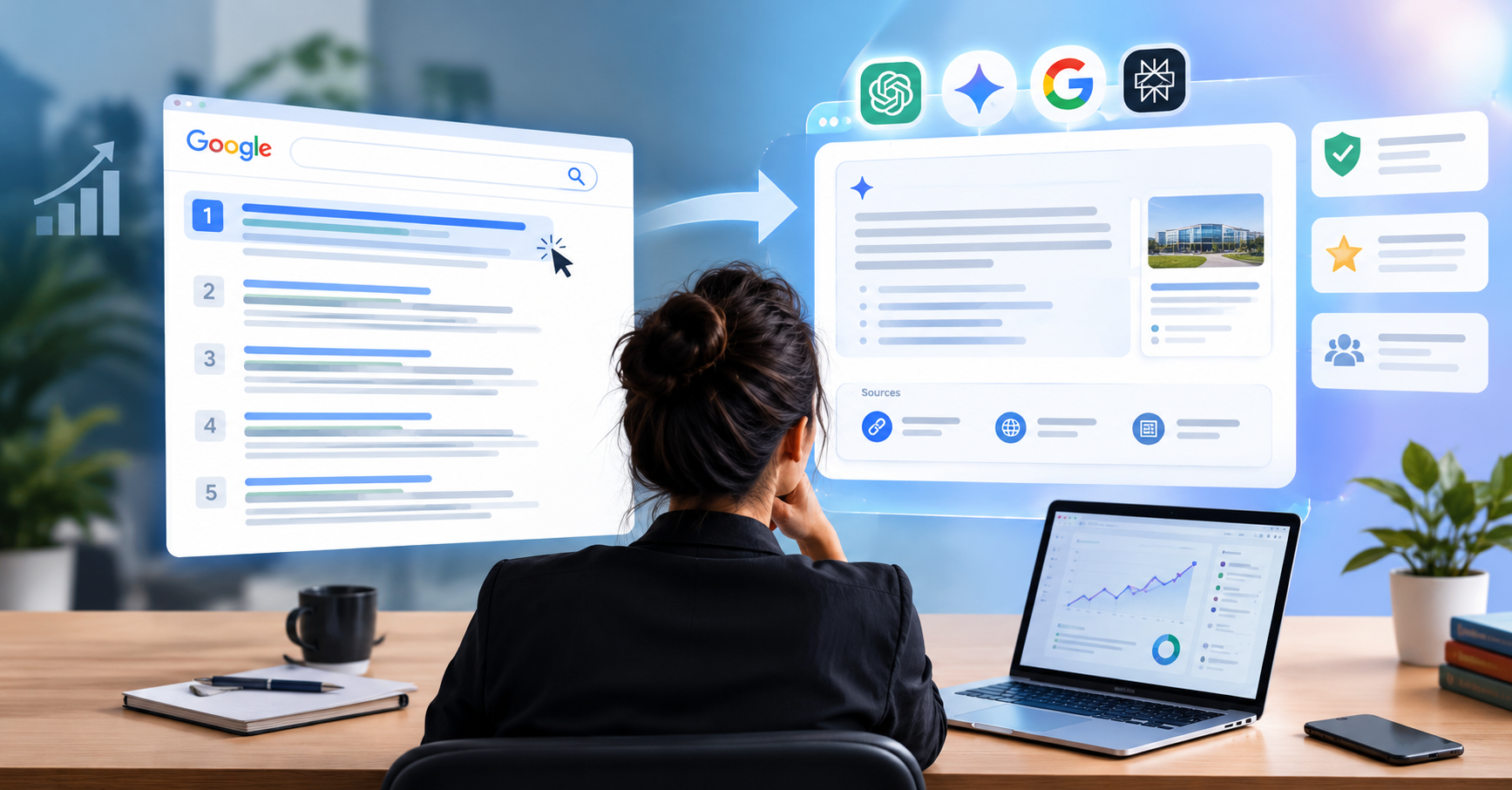
For a long time, SEO had one clear goal: snag the #1 spot in search results. If your website landed at the top, you got the most clicks, the most traffic, and looked like the authority. Teams built entire strategies around chasing that gold medal.
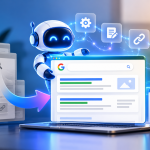
Fast forward to now, and things aren’t so simple. Sure, ranking high still matters, but search has changed. People ask questions and get instant answers from Google’s AI Overviews, ChatGPT, Gemini, Perplexity—you name it. They don’t even need to click through to a website anymore. What really counts is whether your brand pops up in the answer, not if it’s sitting pretty at the top of the link list.
Let’s dig in: why isn’t #1 the finish line anymore? How are marketers adapting and playing to win in the age of AI citations?
Why #1 Used to Be Everything
Back then, search results were a straightforward list. Your choices were on the screen, and the top spot was the obvious pick. Marketers obsessed over keyword rankings because it was a decent guess at how much traffic you’d get.
But now that proxy doesn’t tell the whole story. Here’s why:
Why Ranking #1 Is No Longer the Finish Line
1. AI Answers Take Center Stage
When an AI Overview shows up, it dominates the page—even pushing the #1 organic result way down. You might technically hold the top spot, but you’re buried below the real answer. Ahrefs looked at 300,000 keywords and found that pages with AI Overviews lost about 58% of their click-through rate. Even if the exact number’s debated, you can’t ignore the direction things are heading.
2. More Searches End Without a Click
SparkToro found that about 68% of US Google searches ended with no click at all, especially when AI Overviews appeared. People are getting what they need right on the results page.
3. Citations Can Beat Rankings
Research from Seer Interactive (shared by Search Engine Land) showed that getting cited in an AI Overview led to double the page CTR compared to not being cited on the same query. And if there was no AI Overview, the average CTR was higher overall. Bottom line: being mentioned in the answer is often more valuable than where your link sits.
4. Users Start Research in AI Tools—Not Google
A lot of people skip search engines and jump straight into ChatGPT, Gemini, or Perplexity. These platforms decide which brands (if any) get named or recommended. There’s no ranking—just whether you show up in the answer.
5. Rankings Don’t Guarantee Selection
AI pulls info from all over: search results, reviews, news, forums, third-party sites. If your brand shines elsewhere online, AI will pick it up, even if someone else is ranked higher on Google.
A note on balance
organic rankings aren’t useless. Many AI features still rely on search indexes, so ranking well helps your citation chances. Plus, transactional and brand searches are less affected than info searches. It’s not that “rankings are dead” — it’s just that they’re not enough anymore.
How Marketers Are Making the Shift
1. Redefining Success
Teams now track citations in AI answers, brand mentions, share of voice, accuracy and sentiment of descriptions, branded search growth, conversions—clicks are just one part of the mix.
2. Tracking AI Visibility
Marketing teams gather real questions customers ask, and routinely test them across AI platforms. They track if the brand shows up and how it’s presented. AI visibility tools help, but even just a spreadsheet and prompt list works.
3. Writing for Extraction
To get cited, content needs to be easy to quote. Pages are structured with:
– Direct answers up front (think 40-60 words under a clear heading)
– Clear headings, short paragraphs, lists and tables
– FAQ sections with schema markup
– Precise facts, definitions, dates—stuff AI can grab without twisting it
4. Publishing Original Material
AI usually regurgitates what’s already out there. Putting out your own data, surveys, expert opinions, case studies, and firsthand experiences gives AI a reason to cite your brand.
5. Investing in Third-Party Validation
Marketers chase PR, expert reviews, industry directory listings, and community presence. The more trusted sites mention you, the stronger your entity signals are for AI.
6. Building Topical Authority
Instead of running after one-off keywords, teams build content clusters and standardize brand info across sites and profiles. A consistent presence makes it easier for AI and search engines to trust and recognize you.
7. Optimizing for Remaining Clicks
Some content AI can’t replace: calculators, templates, original research, deep comparisons, opinion pieces. If you make something genuinely useful, people will still want to click.
8. Fixing Misconceptions
If AI gets your brand wrong, marketers hunt down where the error started and fix it on their site and the broader web—then publish clear, authoritative information.
A Simple Roadmap for Moving Beyond Rank #1
- Audit your top pages. Which keywords trigger AI Overviews? Are you cited?
- Build a prompt library. List real customer questions (30-100), test them in AI tools.
- Benchmark competitors. Check who gets mentioned more.
- Restructure key content. Add direct answers, clear headings, FAQs, schema markup.
- Add original value: data, expert advice, concrete examples.
- Raise your off-site profile: PR, reviews, expert placements.
- Update reporting. Add citation, mention, and share of voice metrics—along with rankings.
- Check in monthly. AI answers evolve, so stay sharp.
Common Mistakes to Avoid
- Abandoning SEO fundamentals. Technical health, relevance and links still underpin both rankings and citations.
- Treating one AI answer as the truth. Responses vary by run, location and model, so track trends rather than screenshots.
- Publishing generic AI-written content. If it adds nothing new, there is no reason for AI to cite it.
- Measuring only clicks. Influence can happen without a visit, so use branded search, assisted conversions and surveys to capture it.
- Overreacting to early data. Studies are still evolving, and click patterns have shown signs of shifting, so test and adapt instead of making drastic bets.
The Bottom Line
Ranking #1 used to be everything. Now, it’s just the beginning. The brands that win will nail their rankings, but they’ll also earn those AI citations, shape how AI talks about them, and measure impact beyond simple clicks. So, the question isn’t just “where do we rank?” It’s “are we included in the answer?”